

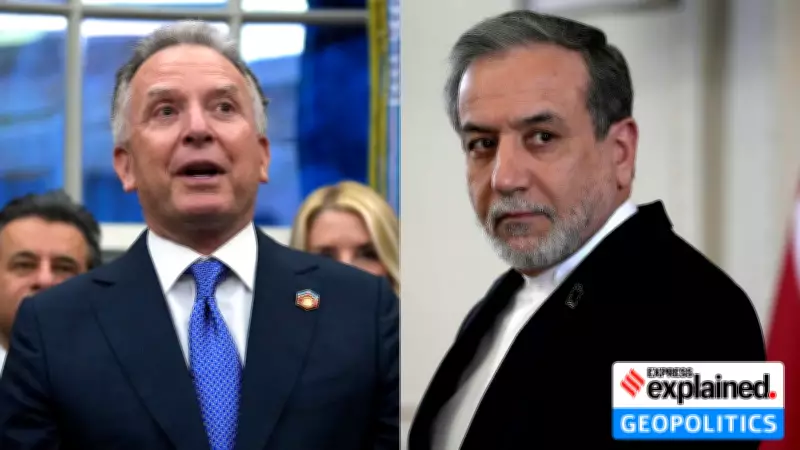
US-Iran Talks: Navigating Negotiations Amid Military Buildup
Over the past two decades, discussions between the United States and Iran have been characterized by a slow pace, counterproductive formats, and a significant lack of good faith between the negotiating parties. Mutual trust has deteriorated further in the last 12 months, setting a tense backdrop for recent diplomatic efforts.
Renewed Negotiations and Hostile Rhetoric
On February 6, 2026, the United States and Iran initiated fresh negotiations, following five rounds of indirect talks in April-May 2025 that were disrupted by joint Israeli and American military actions against Iran in June. In the intervening months, neither side ruled out further dialogue, but hostile rhetoric remained elevated. By January 2026, the US President had outlined new reasons for potential war, suggesting that Washington might supplement anti-regime demonstrations in Iran with military intervention to topple the government.
In the weeks leading up to the talks, the US bolstered its military presence in the region, deploying a carrier strike group, guided missile destroyers, Delta Forces, drones, reconnaissance aircraft, and air defense batteries to areas such as the Persian Gulf, Arabian Sea, Mediterranean, and over 19 bases housing approximately 40,000-50,000 US troops. In response, Iran has threatened to blockade the Strait of Hormuz and retaliate against US targets, including Al Udeid airbase in Qatar, the US Navy Fifth Fleet headquarters in Bahrain, US bases in Iraq, and Israeli sites. Iranian forces have conducted exercises and seized oil tankers, escalating tensions.

Why the Dual Approach of Buildup and Diplomacy?
The US President's approach has been marked by a mix of conciliation and threats. When the US declared readiness to support protestors in early January, its military strength in the Middle East was at a decades-low, partly due to deployments in the South China Sea and Caribbean. As Iran managed to contain domestic unrest, the US shifted its rationale for military buildup to addressing the Iranian nuclear threat, despite earlier claims it had been neutralized.
Using anti-regime demonstrations as a basis for attack carries significant risks, including the potential for a protracted war with regional spillovers or an early exit without achieving maximalist goals, as seen in the US's brief conflict with Yemeni Houthis in 2025. Ultimately, the US seeks a deal on Iran's nuclear program, aiming to surpass the 2015 Joint Comprehensive Plan of Action. The strategy involves coercing Iran through military encirclement to secure better concessions, rather than fostering good faith in dialogue.
Iran's Perspective and Leverage
For Tehran, engaging with Washington is essential to secure sanctions relief, but it also recognizes a unique leverage. Iran's maximalist threats of retaliation, including attacks on third-party states hosting US assets and Israel, create a zero-sum military stance that may push for non-zero outcomes in diplomacy. Iran is wary of a repeat of the June 2025 joint US-Israeli bombardment during diplomatic talks, necessitating a hardline military position to reinforce negotiations and demonstrate that war would be a path of high resistance.
Red Lines and Potential Concessions
Iran maintains two key red lines: its sovereign right to enrich uranium on its soil is non-negotiable, and discussions are limited to nuclear issues, excluding ballistic missiles and support for regional non-state actors. The US demands that Iran forfeit enrichment rights, give up its stock of 60% enriched uranium, halt ballistic missile development, and cease support for allies, with Israel encouraging the latter two points.
Despite these antagonistic positions, room for concessions exists. Iran might consider relinquishing its 60% enriched uranium stockpile to Russia, which already operates a nuclear plant in Iran. If long-term enrichment rights are preserved with IAEA oversight, short-term restrictions could be tolerable, especially with a multinational fuel supply consortium. On ballistic missiles, Tehran might accept regulations on use rather than development, viewing it as a strategic win given past successes against Israeli defenses. However, halting support for non-state allies is less verifiable due to Iran's expertise in covert operations.

Future Prospects and Risks
US-Iran talks have historically suffered from slow progress and a lack of trust, which has worsened recently. The current situation poses a real risk of inadvertent escalation, with the US lacking a clear war threshold compared to Iran's defined red line of any attack. The US military buildup risks a commitment trap, forcing action to save face, which could undermine negotiations.
Both sides are aware of these dangers, blaming each other for the impasse. The February 6 talks aimed not only to de-escalate but also to manage expectations and set a framework for future discussions. While described as positive, success in resolving a two-decade-old issue requires restoring a modicum of good faith. Without it, both parties may delay until they feel their bargaining positions are stronger.
Israel remains a wild card, preferring military action only if the US commits to decisive engagement until regime change. Anything less could harm joint deterrence and highlight Trump's aversion to protracted conflicts, reminiscent of experiences in Afghanistan and Iraq, with Iran posing even greater challenges.





