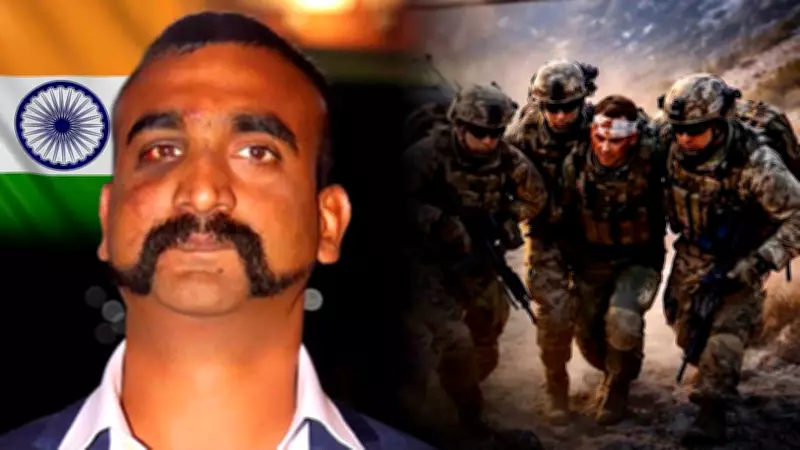
US Iran Rescue Mission Revives Critical Question: Could India Have Attempted Similar Operation in 2019?
The recent US combat search and rescue operation conducted inside Iranian territory has reignited a crucial strategic debate within India's defense and security circles. This operation has prompted experts and analysts to revisit a pivotal moment from 2019: could India have attempted a similar high-risk rescue mission when Wing Commander Abhinandan Varthaman was captured by Pakistani forces after his aircraft was shot down across the Line of Control?
Analyzing the Capability Gap: US CSAR Architecture vs. Indian Assets
The successful US operation showcases a sophisticated and dedicated Combat Search and Rescue framework that has been developed over decades. This system involves multiple integrated components:
- Specialized rescue helicopters designed for stealth and survivability in hostile environments
- Escort fighter aircraft providing air cover and suppression of enemy defenses
- Aerial refueling capabilities extending operational range and endurance
- Highly trained pararescue teams with extensive mission rehearsal experience
- Global basing infrastructure enabling rapid deployment
- Advanced intelligence, surveillance, and reconnaissance capabilities to shape the battlespace
India possesses several foundational elements that could theoretically support such operations. The Indian Air Force operates strategic airlift platforms including the C-130J Super Hercules and C-17 Globemaster III, while elite special forces units like the Garud commandos and Para Special Forces have demonstrated exceptional capabilities in various operations.

However, critical gaps remain in India's operational readiness for such missions. Most notably, India lacks dedicated combat rescue helicopters specifically configured for penetrating hostile airspace under fire. Additionally, there is no permanently configured rapid-response CSAR task force maintained at high readiness levels comparable to US capabilities.
The 2019 Scenario: Operational Realities and Strategic Constraints
Beyond capability considerations, the specific circumstances surrounding Wing Commander Abhinandan's capture presented formidable challenges that made any rescue attempt exceptionally difficult:
- Extremely Limited Time Window: Abhinandan was captured within minutes in a populated area near the Line of Control, leaving virtually no operational window for planning and executing a rescue mission before he was moved to more secure locations.
- Geopolitical Escalation Risks: Any cross-LoC mission would have represented a significant escalation between two nuclear-armed neighbors, potentially triggering broader conflict with unpredictable consequences.
- Intelligence Limitations: Real-time intelligence about Abhinandan's precise location, security arrangements, and movement patterns would have been extremely difficult to obtain in the immediate aftermath of the incident.
- Diplomatic Alternatives: India pursued a calibrated coercive strategy combining diplomatic pressure, military posturing, and international engagement that successfully secured Abhinandan's release within 48 hours without escalating to direct military confrontation.
Strategic Calculus in South Asia: When Rescue Missions Become Geopolitical Decisions
The Abhinandan episode underscores a fundamental reality of South Asian security dynamics: in this region, even what appears to be a tactical rescue operation is inherently a strategic decision with far-reaching implications. The risk calculus must account for:

- Nuclear escalation thresholds between India and Pakistan
- Regional stability considerations affecting multiple neighboring countries
- International perceptions and diplomatic repercussions
- Long-term bilateral relationship implications
- Domestic political and public opinion factors
While India continues to enhance its special operations capabilities and develop more sophisticated rescue protocols, the 2019 situation highlights how geopolitical context often outweighs purely military considerations in the subcontinent. The successful US operation in Iran serves as both a benchmark for capability development and a reminder of the unique constraints that shape military decision-making in different regional contexts.
As India modernizes its armed forces and develops more expeditionary capabilities, the balance between tactical military options and strategic geopolitical considerations will remain a central challenge for defense planners and political leadership alike.