

US Hosts Global Minerals Summit to Counter China's Dominance
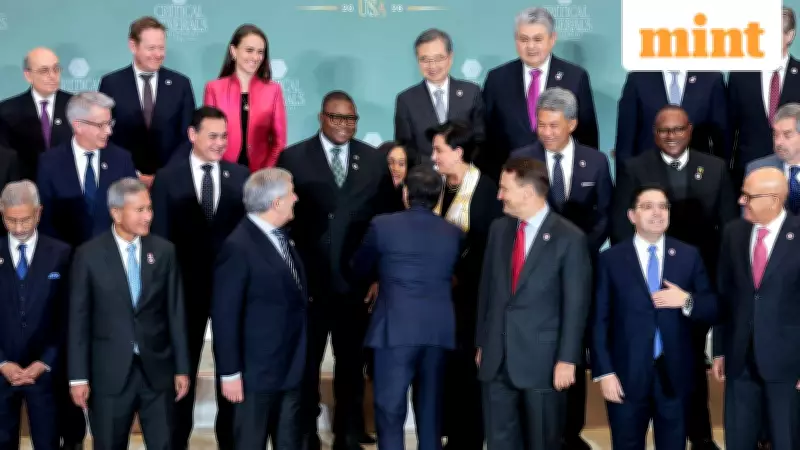
The administration of US President Donald Trump organized a significant Critical Minerals Ministerial event on Wednesday, local time, with the explicit goal of challenging China's overwhelming control over the global critical minerals industry. This strategic gathering brought together nations from across the world to discuss collaborative efforts in securing access to these essential resources.
Building a New Trade Framework for Essential Resources
Officials from the Trump administration outlined ambitious plans to create a dedicated trade zone specifically for critical minerals. These minerals are fundamental components in the manufacturing of nearly every modern technology, including smartphones, advanced defense systems, powerful magnets for wind turbines, and efficient electric vehicle motors. The initiative seeks to diversify global supply chains and reduce dependency on any single nation.
Global Participation and Shared Concerns
The ministerial event witnessed participation from an impressive 54 countries, demonstrating widespread international concern. Key attendees included the United Kingdom, the European Union, Japan, India, Australia, South Korea, and the Democratic Republic of Congo. Delegates engaged in detailed discussions regarding the availability and reliable access to minerals that are vital for producing computer chips, EV batteries, and other crucial technological items, as reported by the BBC.

The US Strategy and Investment Pledge
While acknowledging that China currently leads in the mining and processing of critical minerals, including rare earths, US officials carefully framed their remarks. Secretary of State Marco Rubio and Vice President JD Vance avoided directly naming China, instead referring to challenges posed by "foreign supply" that floods global markets. They argued this situation makes it financially difficult for resource-rich countries to develop their own production capabilities.
In a significant announcement, David Copley, a special assistant to President Trump, revealed plans for massive investment. The US government intends to deploy hundreds of billions of dollars in capital into the mining sector to accelerate specific projects and build domestic capacity.
Diplomatic Progress and New Agreements
Following the summit, the US government confirmed the signing of new agreements with 11 countries. This builds upon 10 similar deals finalized over the preceding five months, with negotiations completed with an additional 17 nations, according to a CNBC report. This rapid diplomatic activity underscores the urgency with which the administration is pursuing this mineral security agenda.
Trump Unveils $12 Billion "Project Vault" Reserve
The Critical Minerals Ministerial followed closely on the heels of a major policy announcement by President Trump. He revealed the establishment of a strategic critical mineral reserve, dubbed "Project Vault," with an estimated value of nearly $12 billion.
Objectives and Structure of Project Vault
This initiative is explicitly designed to reduce Washington's dependence on China for rare earths and other key metals. The project's financial structure combines $2 billion in private capital with a substantial $10 billion loan facility from the US Export-Import Bank. Its primary goal is to create a national stockpile of essential minerals and rare earths, such as gallium and cobalt, as reported by Bloomberg.
Speaking at the White House, President Trump stated that Project Vault aims to "ensure that American businesses and workers are never harmed by any shortages." The project will focus on procuring and storing these critical materials. Under the proposed system, manufacturers would be allowed to access the reserves, provided they commit to replacing the materials they use, according to officials cited in the report.
A Complex Diplomatic Backdrop
The minerals summit occurred on the same day President Trump held a phone call with Chinese President Xi Jinping, which he characterized as "very positive." This juxtaposition highlights the nuanced and often contradictory nature of US-China relations.

Ahead of the US-led meeting, China's Foreign Ministry spokesperson, Lin Jian, reiterated Beijing's stance. He emphasized the need for all countries to adhere to market economy principles and international trade rules, enhance communication, and work together to maintain stable and unimpeded global industrial and supply chains for critical minerals, according to a Xinhua news agency report.
Recent History of Trade Tensions
Diplomatic relations between Beijing and Washington have experienced significant volatility. Tensions escalated rapidly after Trump announced reciprocal tariffs, leading to both nations imposing duties as high as 125% and raising fears of a full-scale trade war. A temporary thaw emerged following talks in Geneva last May, where officials agreed to substantially reduce these tariffs.
However, friction resurfaced in October when China announced plans to expand export controls, covering nearly all products including rare earth minerals. In response, Trump denounced this as an "extraordinarily aggressive" move and imposed an additional 100% tariff on Chinese goods.
The two leaders later met in South Korea during the APEC summit in October—their first meeting in six years. In a closed-door discussion lasting over 90 minutes, they finalized a framework agreement. This resulted in Trump reducing tariffs on Chinese goods to 47%, down from the previously announced 57%. This concession followed a pledge from President Xi to restrict the flow of fentanyl precursor chemicals to the United States.
The Critical Minerals Ministerial and the launch of Project Vault represent a clear strategic pivot by the United States. These moves aim to reconfigure global supply chains, foster new international partnerships, and build a buffer against potential disruptions, all while navigating a complex and evolving relationship with China.





