In a sharp diplomatic rebuke, the United States has dismissed Iran's recent complaint to the United Nations Security Council as a cynical ploy, accusing the Iranian regime of ignoring its own long history of sponsoring global terrorism. The strong response came from US Ambassador to the UN, Linda Thomas-Greenfield, following a letter from Iran's Foreign Minister, Hossein Amir-Abdollahian.
The Core of the Dispute: Iran's UN Complaint
The diplomatic row erupted after Iran formally approached the UN Security Council on April 14th. In its complaint, Tehran alleged that the United States was responsible for what it called "terrorist and criminal acts" against Iran. The Iranian letter specifically pointed a finger at the US for an Israeli military strike on April 1st that targeted Iran's diplomatic consulate building in Damascus, Syria. This attack resulted in the death of several officials from Iran's powerful Islamic Revolutionary Guard Corps (IRGC).
Iran's appeal to the UN invoked the principles of the United Nations Charter and international law, seeking to hold the US accountable. However, the American response was swift and unsparing.

US Ambassador's Scathing Rebuttal
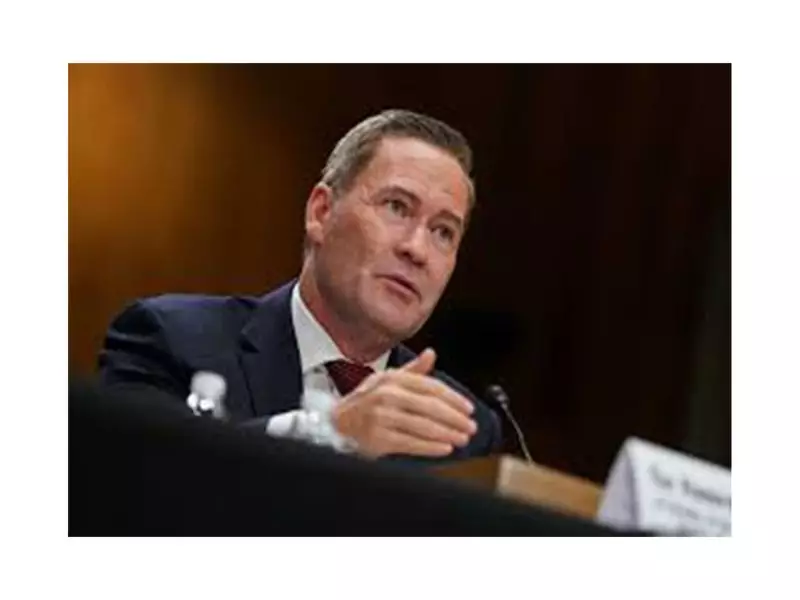
US Ambassador Linda Thomas-Greenfield fired back with a pointed letter of her own. She categorically rejected Iran's accusations, turning the tables on the Tehran government. Ambassador Waltz asserted that it is Iran, not the United States, that has a well-documented record of engaging in and supporting terrorist activities across the globe for decades.
Her letter underscored a central argument: the Iranian regime cannot legitimately cry victim at the UN while its own proxies and military arms, like the IRGC, have been implicated in numerous attacks on civilian and diplomatic targets worldwide. The US stance frames Iran's complaint as an attempt to distract from its own destabilizing actions in the Middle East and beyond.
Broader Context: Nuclear Deal Tensions and Regional Proxy Wars
This exchange is not an isolated incident but a reflection of the deeply fractured relationship between Washington and Tehran. The tensions are rooted in several key issues:
- The Collapsed Nuclear Deal: The 2015 Joint Comprehensive Plan of Action (JCPOA), commonly known as the Iran nuclear deal, has been in tatters since the US withdrawal in 2018 under the Trump administration. Efforts to revive the deal have stalled, leaving a major source of contention unresolved.
- Iran's Regional Activities: The United States and its allies, particularly Israel, consistently accuse Iran of fueling conflict through its support for proxy militias in countries like Yemen, Syria, Lebanon, and Iraq. The IRGC's Quds Force is often cited as the primary vehicle for this external operations.
- Targeted Strikes and Escalation: The Damascus consulate strike is part of a shadow war between Israel and Iran that has intensified. Israel views the IRGC as a direct threat and has conducted numerous strikes against its assets in Syria. Iran's complaint to the UN is seen as a move to legitimize its right to respond, which it later did with a direct missile and drone attack on Israeli territory.
The US letter concluded with a firm warning, stating that America retains its inherent right to self-defense and will not hesitate to protect its personnel and interests in the region. This reinforces the Biden administration's position of maintaining pressure on Iran while responding forcefully to attacks on US allies.
This latest war of words at the United Nations highlights the chasm of mistrust between the two nations. It demonstrates how the UN Security Council often becomes an arena for airing grievances and justifying actions in the complex and volatile geopolitics of the Middle East. For now, the diplomatic channel appears to be used more for accusation and counter-accusation than for genuine conflict resolution.