A provocative social media post by Katie Miller, the wife of a senior aide to former US President Donald Trump, has ignited a fresh diplomatic exchange between the United States and Denmark over the status of Greenland, the world's largest island. The incident comes against a backdrop of renewed US strategic interest in the Arctic region.
A 'SOON' Post and a Diplomatic Reminder
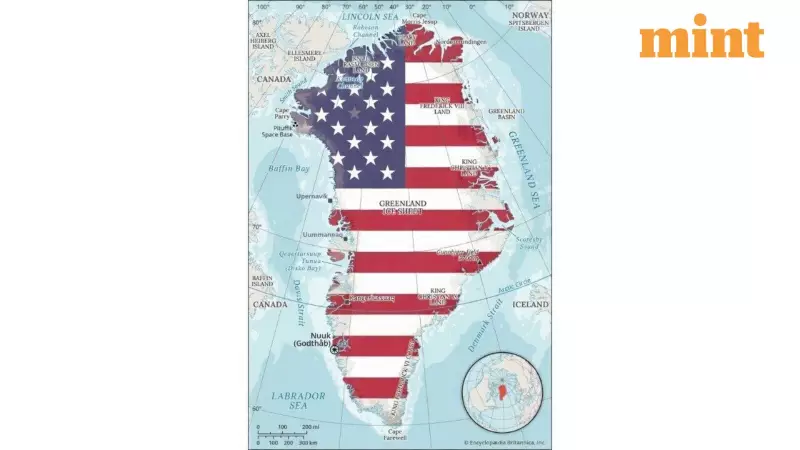
Katie Miller, who served as deputy press secretary at the Department of Homeland Security during Trump's first term, posted an image of Greenland's map painted in the colours of the US flag. The caption simply read: 'SOON'. This was interpreted by many as a suggestion of future American control over the Danish territory.
The post did not go unnoticed in diplomatic circles. Jesper Moeller Soerensen, the Danish ambassador to the US, issued a pointed response. He emphasised the close alliance between the two nations, stating, "Just a friendly reminder about the US and the Kingdom of Denmark: We are close allies and should continue to work together as such. US security is also Greenland’s and Denmark’s security."

Ambassador Soerensen underscored that Greenland is already part of NATO and highlighted Denmark's significant financial commitment to Arctic security, noting a commitment of USD 13.7 billion in 2025 alone for the Arctic and North Atlantic. He concluded with a clear message: "And yes, we expect full respect for the territorial integrity of the Kingdom of Denmark."
Greenland's Strategic Value and Historical Context
This is not the first time Greenland has been in the crosshairs of US political discourse. Donald Trump has repeatedly expressed interest in the island, citing national security benefits. Experts explain its critical importance lies in its geographic position.
"If Russia were to send missiles towards the US, the shortest route for nuclear weapons would be via the North Pole and Greenland," Marc Jacobsen, an associate professor at the Royal Danish Defence College, told the BBC. The US-operated Pituffik Space Base in Greenland is a key asset for continental defence.
Greenland's political journey is complex:
- It has been under Danish control for roughly 300 years, despite being over 3,000 km from mainland Denmark.
- It was governed as a colony until 1953 when it became part of the Danish kingdom.
- A 1979 referendum granted it extensive self-rule, while Denmark retains control over defence and foreign policy.
- The US first established a military presence during World War II after Denmark was occupied by Nazi Germany, and a 1951 defence agreement formalised the US right to maintain bases.
Modern Interests: Security and Minerals
The current tension is fuelled by more than just historical claims. The Arctic region has seen increased military activity from global powers like Russia and China, prompting calls for a stronger US presence. Furthermore, Greenland possesses vast deposits of critical raw minerals and rare earth elements, crucial for modern technology.
A Reuters report indicated the US government's interest in buying a stake in Critical Metals Corp, the company developing a rare earths mine on the island. This economic angle adds another layer to the strategic calculus.
Interestingly, in January 2025, Danish Foreign Minister Lars Lokke Rasmussen stated Copenhagen was willing to discuss Greenland with the US, acknowledging Washington has "legitimate" interests there. However, the ambassador's latest statement reaffirms that any discussion must respect Denmark's sovereignty.
The exchange highlights the delicate balance between allied cooperation and national sovereignty, with a remote, ice-covered island at the centre of a potential new great game for resources and strategic advantage in the High North.