Venezuela has been plunged into a deep political crisis following the dramatic capture of its President, Nicolas Maduro, by the United States military. The operation, which took place in the early hours of Saturday, has left the South American nation without a clear path for immediate political transition, even as its existing government structures continue to function.
Swift US Operation and Constitutional Aftermath
The United States launched a swift overnight military operation against Venezuela early on Saturday, leading to the capture of President Maduro and his wife, Cilia Flores. This action followed months of US accusations linking Maduro's government to narco-terrorism and came after earlier US strikes on alleged Caribbean drug boats and a Venezuelan port on Monday.
In the wake of Maduro's sudden removal, Venezuela's highest court moved to provide constitutional continuity. The court directed Vice President Delcy Rodriguez to assume the role of interim president. Rodriguez, who has served as vice president since 2018, is next in the constitutional line of succession. Trained as a lawyer in Europe, she has long been the international face of the Chavez-Maduro political movement.

Conflicting Statements from Washington and Caracas
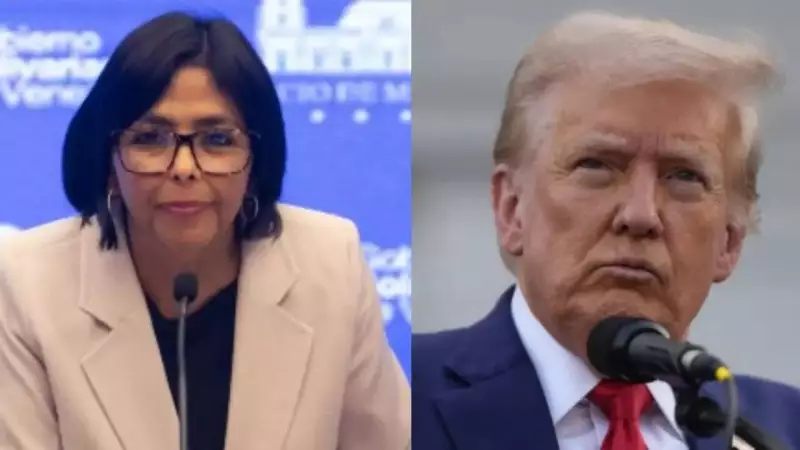
US President Donald Trump announced on Saturday that the United States would take control of Venezuela to ensure a "safe, proper and judicious transition." He outlined plans for major US oil companies to invest billions in fixing the country's broken oil infrastructure. Trump stated that a "group" would lead the effort and mentioned that Secretary of State Marco Rubio had been in talks with Vice President Delcy Rodriguez.
President Trump indicated that Rodriguez was willing to cooperate with Washington, describing her as "quite gracious" and ready to do whatever the US needed. He simultaneously dismissed opposition leader Maria Corina Machado, claiming she lacked sufficient support to lead the country.
However, in a defiant speech soon after Maduro's capture, Rodriguez outright rejected the US action. Standing alongside senior civilian and military leaders, she demanded the immediate release of Maduro and his wife, labelling the military operation a blatant violation of international law. "There is only one president in this country, and his name is Nicolas Maduro," Rodriguez declared.
Uncertain Future and Power Struggle
The sudden removal of Maduro, who had weathered years of coup attempts, mass protests, army revolts, and harsh economic sanctions, has created profound uncertainty. The core question now is who truly controls Venezuela and how power will be exercised in the coming days.
Under Venezuela's constitution, the absence of a president should trigger a new election within a month. Yet, there is no clarity on whether this process has been initiated or if it even applies to the current extraordinary situation. Rodriguez's past engagements, including talks with US political and business figures linked to the oil industry, and the fact that she has not been charged in US courts unlike other Maduro allies, add layers of complexity to the unfolding crisis.
The nation now watches as its constitutional framework collides with the reality of foreign military intervention, setting the stage for a potentially prolonged period of instability and diplomatic confrontation.