US Formally Requests Ukrainian Expertise to Counter Iranian Drone Threat
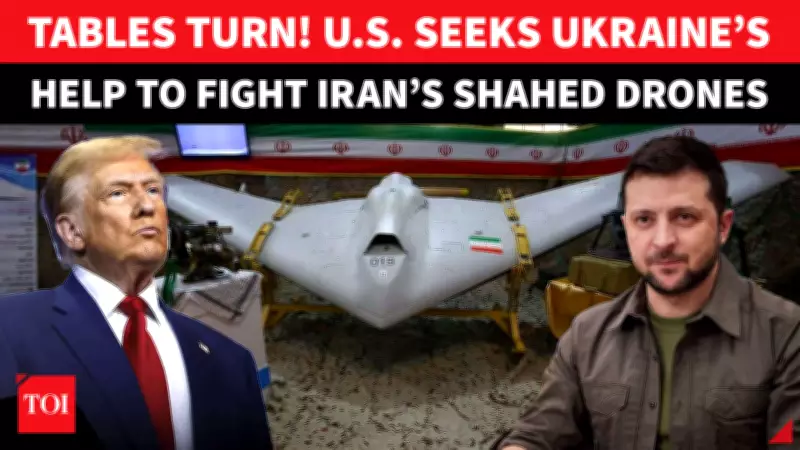
In a significant strategic shift, the United States has officially asked Ukraine for assistance in defending against Iranian-made Shahed drones, following a series of damaging strikes on American military installations across the Middle East. This request comes despite previous political tensions, including former President Donald Trump's mockery of Ukrainian President Volodymyr Zelensky during an Oval Office meeting just one year earlier.
Zelensky Confirms Deployment of Ukrainian Specialists
President Zelensky has confirmed receiving the formal request from Washington and announced that Ukrainian military specialists will be deployed to help address the drone threat. Ukraine possesses what military analysts term "cheap-kill knowledge" – practical, cost-effective experience in countering Shahed variants that the United States never developed domestically.
The Iranian Shahed drone presents a unique asymmetric warfare challenge: each unit costs approximately $20,000 to manufacture, while American interceptor missiles used to destroy them cost millions of dollars per launch. Iran has been deploying these drones in mass waves on a daily basis, creating an unsustainable economic equation for conventional defense systems.

Extensive Combat Experience Against Drone Threats
Ukrainian forces have been actively engaging and shooting down various Shahed drone models for years during their conflict with Russia, which has employed Iranian-supplied drones extensively. This battlefield experience has provided Ukraine with invaluable tactical knowledge about drone patterns, vulnerabilities, and most importantly, affordable countermeasures.
Military records indicate that over 2,150 confirmed interceptions of hostile drones have occurred across the Gulf region, highlighting the scale of the threat facing American and allied forces. The attacks have targeted multiple strategic locations including Al Udeid Air Base in Qatar (America's largest military base in the Gulf), Al Salem Base in Kuwait, and the U.S. Navy's Fifth Fleet headquarters in Bahrain.
American Technological Paradox: Offensive Capability Without Defense
In a revealing technological paradox, the United States military had previously reverse-engineered the Shahed drone to create its own offensive version called LUCAS, which has been deployed operationally against Iranian targets. However, defense planners apparently neglected to develop corresponding defensive systems tailored specifically to counter the low-cost, mass-produced drone threat that Iran has now perfected.
The current situation underscores a critical gap in American military preparedness – while possessing advanced technological capabilities for offensive operations, the U.S. lacked practical, economically sustainable defenses against swarm drone tactics that leverage inexpensive manufacturing and deployment strategies.
Regional Security Implications
The drone attacks have not been limited to military targets alone. Civilian infrastructure has also been impacted, with reports of drone strikes in Dubai causing vehicle fires and threatening high-rise buildings. The broader regional conflict has seen Iranian proxies targeting multiple locations while Tehran has demonstrated capability to strike deep into Israeli territory, including underground shelters used by leadership.
This developing military cooperation between the United States and Ukraine represents a notable realignment in global security partnerships, with battlefield-tested expertise becoming a valuable commodity in modern asymmetric warfare scenarios where cost-effectiveness often determines tactical success.