

Uttar Pradesh Creates History with Living Heritage Conservation Initiative
In a groundbreaking move for environmental preservation, Uttar Pradesh has quietly established itself as a national leader in conservation by protecting heritage that remains alive and breathing. With 948 trees officially notified as 'heritage trees,' UP has become India's first state to institutionalize the conservation and propagation of what officials term "living heritage." These are not artifacts locked behind glass or stone but living organisms that have stood for centuries—witnessing empires, faiths, revolutions, and everyday life while remaining firmly rooted in the soil.
A First-of-its-Kind Framework for Tree Conservation
What distinguishes Uttar Pradesh's approach is not merely the number of trees protected but the systematic process behind it. In 2019, Chief Minister Yogi Adityanath introduced the concept during the inauguration of the state's annual plantation drive. A detailed government order followed in November of that year, establishing a clear framework to identify, verify, and notify heritage trees across both forest and non-forest land.
The actual groundwork commenced in 2020, culminating on July 8, 2021, with the notification of the first list comprising 948 trees. This initiative is explicitly designed as an ongoing exercise, with provisions to add more trees as they meet the established criteria.

Under this innovative system, the UP State Biodiversity Board (UPSBB) holds the authority to declare heritage trees on non-forest land, while trees on forest land fall under the jurisdiction of the forest department. Intriguingly, of the 948 trees declared so far, only one—an Adansonia tree in Barabanki—stands on forest land. The vast majority survive on community and public land, a fact that officials emphasize highlights decades, and even centuries, of dedicated local stewardship.
The Rigorous Identification Process
The identification of these heritage trees involved inputs from multiple sources. Biodiversity management committees across districts submitted nominations, which were then meticulously vetted by divisional forest officers. Concurrently, the UPSBB collaborated with Lucknow University's Institute of Wildlife Sciences (IWS) to conduct a comprehensive field survey.
From September to December 2020—amid the height of the coronavirus pandemic—IWS teams fanned out across all 75 districts of Uttar Pradesh. "We searched for heritage trees on non-forest land with assistance from local communities, district administrations, and forest officials. Some trees left us utterly mesmerized," recounted IWS coordinator Professor Amita Kannaujia.
"One such remarkable tree was Haribans Baba, an ancient banyan located in Malihabad's Majhipura block. Sprawling over nearly three hectares of 'gram samaj' land, this tree is believed to be hundreds of years old. Local lore tells of an ascetic named Haribans Baba who took 'samadhi' at the spot. Over time, the banyan sent down aerial roots that matured into seven or eight separate trunks—creating what appears to be a grove but is, in fact, a single, magnificent organism," she elaborated.
Documenting Stories and Cultural Significance
Following the surveys, each shortlisted tree was documented not only botanically but also culturally. Teams recorded folklore, historical references, details of local custodianship, and precise latitude-longitude coordinates.
"These weren't merely entries in a register. Each tree transformed into a unique story. Not every nominated tree made the final selection," explained retired IFS officer AK Pant, a consultant to the board and member of the expert committee.
The 100-Year Rule and Its Sole Exception
The primary criterion for selection was age—requiring trees to be at least 100 years old or to have survived across four human generations. "Only one tree was granted an exception—the Peepal at Sarnath. Although its exact age could not be conclusively established, its lineage was undeniable," Pant noted.
"Grown from a cutting of the Jaya Sri Maha Bodhi tree in Anuradhapura, Sri Lanka—itself a descendant of the Bodh Gaya tree under which Gautam Buddha attained enlightenment—the Sarnath Peepal was included for its unparalleled spiritual provenance," he added.

Trees That Bear Witness to History
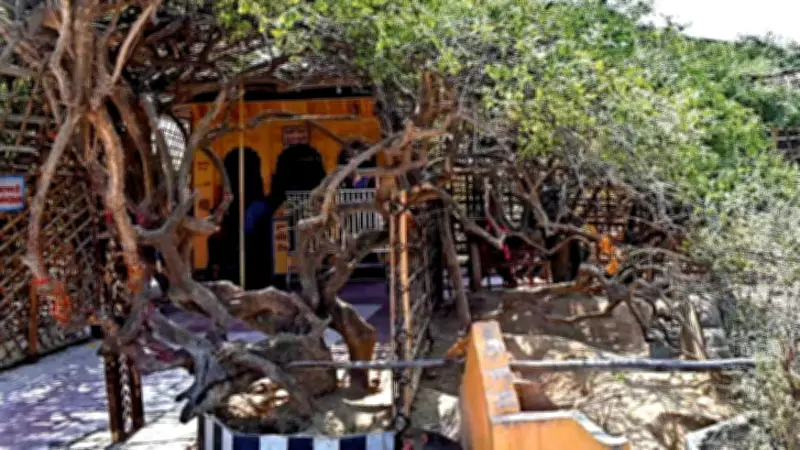
Among the most striking inclusions are trees deeply etched into India's historical memory. Near Prayagraj's Sangam stands the revered Parijaat (Adansonia) tree at Ulta Kila, mentioned by the Chinese traveler Hiuen Tsang in the 7th century. While scientists cannot determine its exact age, estimates suggest it is around 1,300 years old. It is worshipped by both Hindus and Muslims and is often described as a "living fossil."
"Scientists are not able to tell my age, but I may well be about 1300 years old. All through scarring with age, I have attained a girth of 21 metres and still have some of my imposing wide spreading branches. I am revered by both Hindus and Muslims," reads the tree's first-person account in the government's coffee table book on heritage trees.
In Fatehpur, the Bawan Imli tamarind tree carries a darker legacy. In April 1858, 52 freedom fighters were hanged from its branches following the failure of the 1857 Uprising. The tree's official record reads like a haunting first-person testimony: "Even after so many years. I tremble when I recall the happening of the fateful day, April 28, 1858, when 52 brave revolutionaries were hanged till death from my branches. These brave souls included their leader Thakur Jodha Singh Atalya, an immortal son of the nation."
"Heritage trees are a living testament to how local communities have conserved them for generations. In most of the trees we profiled, we highlighted the crucial role of locals. Because a tree on the roadside cannot have existed in good health for so long entirely on its own," Pant emphasized.
Myth, Faith, and Collective Memory
Faith and mythology weave through many of these heritage trees. At Nidhi Van in Vrindavan, four Pilu trees are believed to represent the Gopis from Lord Krishna's 'Raas Lila,' with devotees applying 'sindoor' to their trunks in reverence.
The Akshay Vat banyan inside Prayagraj's Akbar Fort is intertwined with mythology, scripture, and history—mentioned by Tulsidas and associated with Vishnu, Rama, and countless Kumbh Melas. There are also Ramayana-linked trees, such as the Karil tree in Pratapgarh, believed to mark a resting spot of Ram, Sita, and Lakshman during their exile. The famous Mother Tree of Dussehri mango in Lucknow's Kakori and the Mother Tree of Langda mango in Varanasi also find prominent mention.
Diversity Beyond Peepal and Banyan
Of the 948 heritage trees, Peepal dominates with 422 entries, followed by Banyan (355) and Pakar (57). In total, 28 species have been recorded, including:
- Kusum
- Neem
- Mahua
- Arjun
- Sal
- Jamun
- Shami
- Mango
- Various rare or near-lost species
Geographically, Varanasi leads with 99 heritage trees, followed by Prayagraj with 53.
Conservation, Propagation, and Public Awareness
The government has published a complete list of all 948 trees, with detailed narratives for approximately 100 of them featured in a specially created coffee table book. Additionally, heritage tree gardens have been established in 11 districts, including Lucknow, Ayodhya, Varanasi, and Chitrakoot. Each garden is required to plant a sapling or branch propagated from an original heritage tree, alongside native species.
Plans are also underway to develop several heritage tree sites as eco-tourism destinations, promoting both conservation and public engagement.
Communities as Custodians of Living Heritage
Notably, trees on private land were excluded from this initiative. Officials stress that the emphasis is squarely on community and public spaces, reinforcing the role of collective stewardship. In an era where heritage is often reduced to ruins, Uttar Pradesh's heritage trees serve as a powerful reminder that history does not always crumble—sometimes, it continues to grow, breathe, and thrive through the enduring legacy of these ancient living monuments.





