

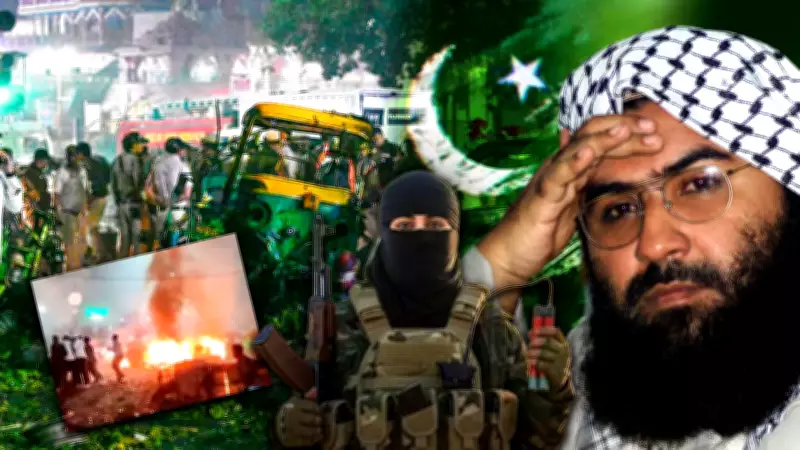
UN Security Council Report Implicates Jaish-e-Mohammed in Delhi Red Fort Terror Attack
A recent report from the United Nations Security Council has thrust the Pakistan-based terrorist organization Jaish-e-Mohammed (JeM) back into the international spotlight. The document explicitly links JeM to the devastating November blast at Delhi's historic Red Fort, an attack that resulted in the tragic loss of 15 lives. This finding corroborates and reinforces the investigative conclusions previously reached by Indian security agencies, including the National Investigation Agency (NIA).
White-Collar Terror Module and Coordinated Network Uncovered
The NIA's earlier probe had already unearthed a sophisticated, coordinated interstate network operating within India. This network was described as a white-collar terror module, indicating a shift towards more covert and financially enabled operational methods. The UN report's alignment with these domestic investigations underscores the credibility and seriousness of the threat posed by such networks.
Alarming Strategic Shift: Masood Azhar Announces Women-Only Wing
Perhaps the most concerning development highlighted in the UN document is the announcement by JeM leader Masood Azhar regarding the formation of a new, women-only wing named Jamaat ul-Muminat. Security analysts and observers interpret this move as a deliberate and strategic shift by the terror group. The primary objectives appear to be twofold:

- Expanding recruitment pools by targeting a demographic traditionally less scrutinized.
- Evading heightened surveillance and detection by law enforcement and intelligence agencies.
This development signals an adaptation in terror tactics aimed at sustaining and potentially increasing operational capacity.
Contradicting Narratives and Regional Security Implications
The UN report presents a complex picture. While one unnamed Member State reportedly claimed that Jaish-e-Mohammed was inactive, the evidence linking the group to the Red Fort attack and other related incidents strongly challenges this assertion. Given JeM's history and its existing placement under UN sanctions due to its established links with al-Qaeda, the report serves as a stark reminder. It highlights the persistent and evolving cross-border terror threats that continue to challenge India and the stability of the wider South Asian region. The findings call for sustained international vigilance and cooperative counter-terrorism efforts.






