Turkey Issues Formal Protest to Iran After NATO Intercepts Ballistic Missile
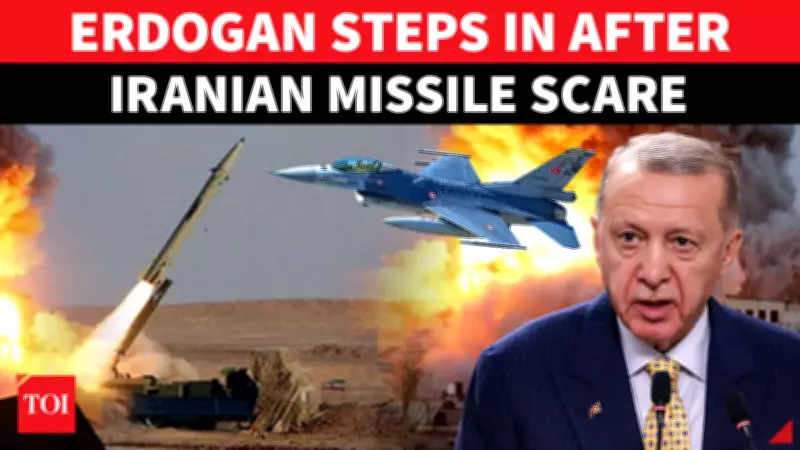
In a significant diplomatic development, Turkey has summoned Iran's ambassador following the detection and interception of a ballistic missile fired from Iranian territory. The missile was reportedly heading toward Turkish airspace, passing through Syrian and Iraqi airspace before being neutralized by NATO air and missile defense systems in the eastern Mediterranean Sea.
Security Concerns and Official Response
The Turkish Defense Ministry confirmed that the missile was successfully destroyed, with no casualties or damage reported on the ground. However, Ankara has formally conveyed its protest to Tehran, labeling the missile's trajectory as a serious security concern. This incident underscores the volatile nature of regional dynamics and the potential for miscalculation.
Turkish officials emphasized that the missile's path, which traversed multiple countries before approaching Turkish airspace, violated international norms and posed a direct threat to national security. The swift response by NATO defenses highlights the alliance's readiness to protect member states from external threats.

Escalating Diplomatic Tensions
This event has significantly heightened diplomatic tensions between Turkey and Iran, two regional powers with complex historical and political relationships. The incident occurs against a backdrop of growing instability across the Middle East, where proxy conflicts and military posturing have become increasingly common.
Analysts suggest that such episodes could strain bilateral relations further, potentially impacting regional cooperation on issues like trade, security, and refugee management. The Turkish government's decision to summon the Iranian ambassador is seen as a strong diplomatic move, signaling Ankara's unwillingness to tolerate security breaches.
Broader Regional Implications
The interception of the Iranian missile by NATO forces also raises questions about the broader security architecture in the region. With multiple actors involved, including Syria, Iraq, and international alliances like NATO, the incident highlights the intricate web of alliances and enmities that define Middle Eastern geopolitics.
Key points to consider include:
- The role of NATO in regional defense and its implications for non-member states.
- The potential for escalation between Iran and Turkey, both of which have significant military capabilities.
- The impact on ongoing conflicts in Syria and Iraq, where both countries have vested interests.
As tensions simmer, the international community will be closely monitoring developments, hoping to prevent further escalation that could destabilize an already fragile region.