In a dramatic escalation that has sent shockwaves through international diplomacy, the United States military on Saturday captured Venezuelan President Nicolás Maduro. The operation, coupled with President Donald Trump's announcement that the US would effectively administer the oil-rich nation until a "proper" transition, has injected severe volatility into global politics, forcing nations worldwide to reassess their relationship with American power.
A Direct Challenge to Global Norms
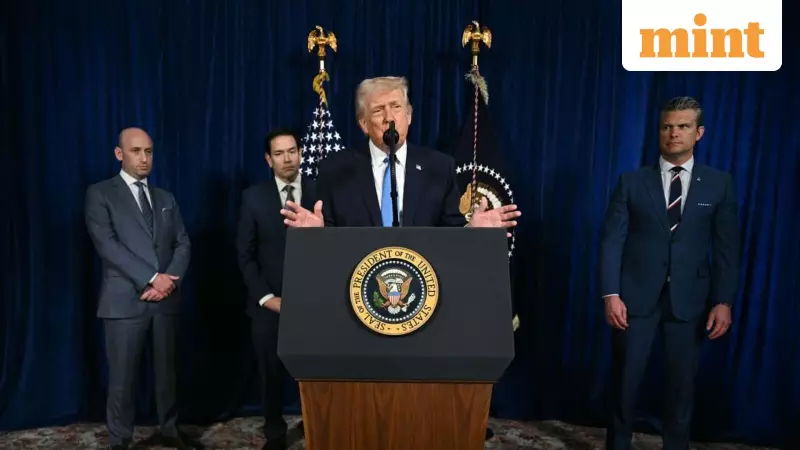
The strike on Saturday, 4 January 2026, marks a pivotal moment, coming after months of rising tensions between Washington and Caracas. These included US airstrikes on suspected drug smugglers at sea and seizures of oil tankers. During a press conference, President Trump declared that US oil firms would invest billions to repair Venezuela's crumbling oil infrastructure, extracting wealth to be partially shared with Venezuelans. He emphatically stated, "American dominance in the Western Hemisphere will never be questioned again."
This action directly challenges the long-held norms of sovereignty and non-intervention that have underpinned the global order for decades. Geopolitical analysts warn it could embolden other powers and create dangerous tripwires, particularly concerning flashpoints like Taiwan, which China claims as its own territory.

China's Calculated Response and the Taiwan Question
The timing is especially sensitive given recent geopolitical manoeuvres. Just hours before the strike, a Chinese delegation met with Venezuelan officials. China, which has vast investments in Latin American ports, energy, and infrastructure, condemned the US action through its Foreign Ministry, urging Washington to abide by international law.
Analysts are divided on the long-term impact on US-China relations. Marc Gustafson of Eurasia Group argues the US has undermined its own moral authority on sovereignty, a key argument in its deterrence strategies regarding Ukraine and Taiwan. Zack Cooper of the American Enterprise Institute sees a mixed outcome for Beijing: while losing an ally in Maduro, China now has a potential model for a "decapitating strike" against Taiwan's leadership.
However, Ryan Hass of the Brookings Institution believes Beijing is more likely to use this precedent to demand similar "great power exemptions" from international law, particularly in the South China Sea, and to mute US criticisms of its actions there.
Regional Dominoes and Strategic Shifts
Attention now turns to who might be next. Trump explicitly mentioned Mexico and Colombia over drug trafficking, but analysts are closely watching Cuba. US Secretary of State Marco Rubio suggested the Cuban government "should be concerned." Rodger Baker of RANE Network notes that while China supports Cuba economically, its defense would rely on Russia, which is preoccupied with Ukraine. This could lead to a quiet deal where Russia refrains from aiding Cuba in exchange for US concessions on Eastern Ukraine.
Baker suggests we are witnessing a shift from a global balance of power to an acceptance of distinct spheres of influence, with Trump likely focusing on conflicts closer to home or aligned with specific US interests.
For businesses and investors, the Venezuela operation is a stark reminder that local political dynamics can swiftly disrupt trade flows, create non-tariff barriers, and impact the movement of goods and capital globally.
The coming weeks are critical. Jon Alterman of CSIS notes that if the US manages a relatively smooth transition in Venezuela, it would project a "sense of American tenacity" and could make other nations more conciliatory. However, that remains a significant "if," hinging on whether remnants of Maduro's regime cooperate and if the US can successfully manage a regime change remotely.

Adding to the global uncertainty is what analysts see as a lack of a clear, coherent strategy from the Trump administration. Nicholas Redman of Oxford Analytica points to recent US actions—like strikes in Nigeria to protect Christians and threats against Iran—as introducing a values-based element not formally outlined in US security strategy, creating confusion for both allies and rivals. The world now watches to see where American power turns next.