In a series of dramatic statements, former US President Donald Trump has executed a significant public reversal regarding India, moving from pointed criticism to assertions of enduring friendship with Prime Minister Narendra Modi. This diplomatic pivot comes amidst a backdrop of trade threats and India's steadfast foreign policy moves on the global stage.
From 'Sulking' to a Stunning U-Turn
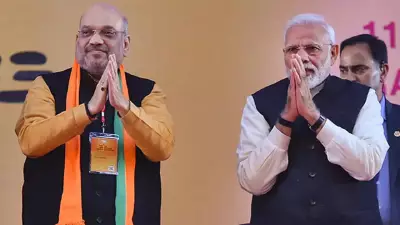
The initial friction stemmed from Trump's apparent displeasure with India's strategic engagements, particularly with China. Reports indicated he first 'sulked' over what he perceived as India's 'pivot' towards China. This sentiment escalated into a claim that the United States had 'lost India to China,' a statement that sent ripples through diplomatic circles. However, in a swift and stunning reversal, Trump later declared, 'Modi & I Will Always Be Friends,' marking a significant U-turn in his public rhetoric.
This verbal shift did not occur in a vacuum. It coincided with heightened tensions over trade and India's independent foreign policy. Trump, in a move described as 'declaring war' on trade, threatened to slap an additional 25% in tariffs on Indian goods. The stated trigger was India's refusal to snub Russian President Vladimir Putin and reject imports of Russian oil, defying Western pressure following the Ukraine conflict. Trump's trade adviser reportedly expressed rage over the growing bonhomie between Modi, Putin, and Chinese President Xi Jinping at the recent SCO Summit, labeling the situation a 'shame.'

India's Defiant Stance and SCO Diplomacy
Prime Minister Modi's actions at the Shanghai Cooperation Organisation (SCO) summit became a central point of contention. His meetings with both Putin and Xi, and India's continued purchase of Russian oil, were viewed by Trump's camp as a direct challenge to US economic strategies. Reports even suggested Trump's anger led to a 24-hour ultimatum for Delhi to stop buying Russian oil, a demand India clearly did not acquiesce to.
Meanwhile, PM Modi was also active on the domestic security front. In his first visit to Jammu & Kashmir after the Pahalgam terror attack, he made a significant declaration, stating that 'Pakistan attacked Kashmiriyat.' This strong statement reaffirmed India's position on cross-border terrorism. Separately, a tragic landslide in Sikkim, triggered by the swelling of the River Teesta, hit an Indian Army camp, resulting in three personnel killed and six missing.
Broader Political Echoes and Fallout
The geopolitical discourse extended beyond the executive branch. In a notable international address, Congress leader Shashi Tharoor mocked Pakistan's stance on Kashmir during a speech in Guyana. He pointedly remarked that 'They want something they don't have,' dismissing Pakistan's territorial aspirations. On the Russia-Ukraine front, Russian Foreign Minister Sergey Lavrov declared that President Putin would not meet Ukrainian leader Volodymyr Zelensky, shocking Trump and others by questioning the premise of meeting a leader 'pretending to be' something.
The confluence of these events paints a picture of a complex diplomatic period. India, under Modi's leadership, is navigating a multipolar world by engaging with all major powers—the US, Russia, and China—while firmly defending its national economic and security interests. Trump's oscillating statements, from tariff threats to friendship assurances, highlight the volatile nature of the relationship and the challenges of balancing strategic autonomy with global partnerships. The episode underscores that in modern diplomacy, economic pressure and public posturing are often interwoven with long-term strategic calculations.