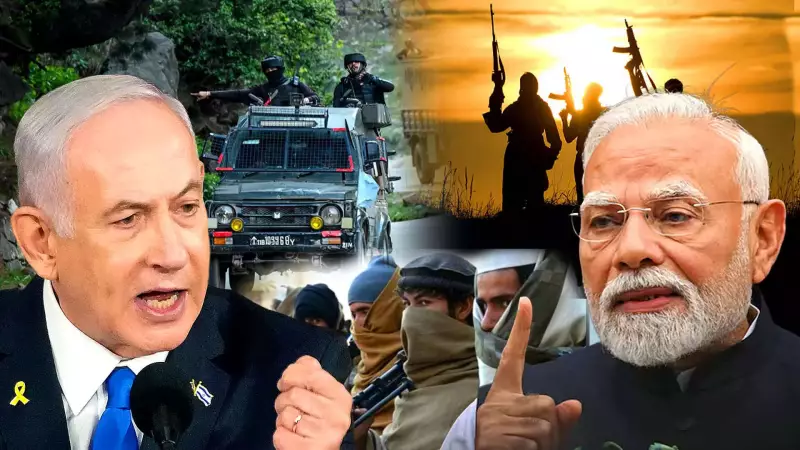
Recent days have witnessed a whirlwind of diplomatic statements and strategic posturing involving India, the United States, Russia, and China, centered on trade, alliances, and the fallout from the SCO summit. The focal point has been former US President Donald Trump's volatile commentary on India's foreign policy and Prime Minister Narendra Modi's firm stance on national interests.
Trump's Diplomatic Flip-Flop: From 'Sulking' to 'Friends Forever'
The drama began when Donald Trump expressed public displeasure, suggesting the United States had 'lost' India to China. He appeared to critique India's strategic engagements, framing them as a pivot towards Beijing. This sentiment was quickly followed by a stark reversal, where Trump declared, 'Modi & I will always be friends', marking a stunning U-turn in his rhetoric. This shift highlights the unpredictable nature of the discourse surrounding the crucial US-India partnership in the lead-up to the American elections.
Adding fuel to the fire, Trump's trade adviser reportedly expressed rage over the visible camaraderie between PM Modi, Russian President Vladimir Putin, and Chinese President Xi Jinping at the recent Shanghai Cooperation Organisation (SCO) summit. The perceived bonhomie at the multilateral forum was seen in some quarters as undermining US pressure campaigns, particularly regarding sanctions on Russia.

Modi's SCO Strategy and the Tariff Retaliation
At the SCO summit, Prime Minister Modi did not hold back in his critique of protectionist policies, which was interpreted as a direct response to Trump's tariff threats. Modi championed the cause of developing nations, warning against 'selfish economies' that harm global growth. This assertive posture, following his meetings with both Putin and Xi, signaled India's independent foreign policy trajectory.
The tension escalated rapidly on the trade front. Reports indicate that Trump, angered by India's continued defiance in purchasing Russian oil, responded by declaring an economic 'war' and imposing additional tariffs. One report claimed he slapped an extra 25% tariff as a punitive measure after India refused to snub Putin or reject Russian oil imports. Another suggested Delhi was given a 24-hour ultimatum to stop buying Russian oil or face consequences, underscoring the high-stakes economic confrontation.
Domestic Front: Security and Sovereignty in Focus
Amidst the international furore, significant developments unfolded domestically. Prime Minister Modi made his first visit to Jammu & Kashmir after the tragic Pahalgam terror attack. During the visit, he made a strong declaration, accusing Pakistan of attacking the very essence of 'Kashmiriyat' (the Kashmiri ethos of harmony).
In a separate tragic incident, a massive landslide in Sikkim, triggered by the swelling of the Teesta River, hit an Indian Army camp. The disaster resulted in the deaths of three army personnel, with six others reported missing, highlighting the challenges posed by natural calamities.
On the diplomatic advocacy front, Congress leader Shashi Tharoor, speaking in Guyana, mocked Pakistan's persistent claims over Kashmir. He succinctly summarized the situation by stating that Pakistan 'wants something they don't have', reinforcing India's position on the issue.
Analysis: Navigating a Multipolar World Order
The confluence of these events paints a picture of a nation strategically navigating a complex and multipolar world. India is simultaneously engaging with traditional partners like Russia, managing a contentious relationship with China, and dealing with an unpredictable political force in the United States. Modi's government is projecting an image of a confident power that will not be bullied on its core economic and security interests, be it energy imports from Russia or its stance on Kashmir.

The Trump factor introduces a layer of uncertainty for future US-India relations, with rhetoric swinging from confrontation to camaraderie. However, India's clear actions at the SCO and its unwavering stance on purchasing Russian oil demonstrate a commitment to pragmatic diplomacy aimed at securing its national interests above all else. The coming months will be critical in determining how these diplomatic and trade tensions evolve.