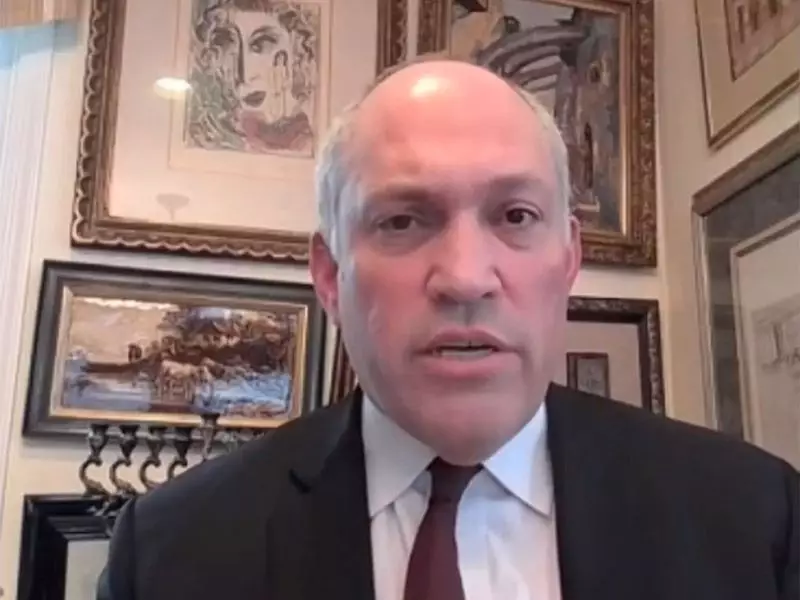
A former senior Pentagon official has made a striking claim, stating that Russian President Vladimir Putin's high-profile visit to India was a direct consequence of what he termed the "gross incompetence" of former US President Donald Trump's administration. This statement throws a spotlight on the complex geopolitical currents shaping India's foreign policy and its relationships with global superpowers.
The Core Accusation: A Failure of American Strategy
The official, whose insights were reported by The Tribune, pointed to a significant vacuum in American diplomatic engagement and strategic consistency during Trump's tenure. This perceived "gross incompetence" in managing key international relationships, according to the analysis, created an opening for Russia to deepen its historic ties with India. The argument suggests that a more coherent and engaged US foreign policy under Trump could have potentially limited Moscow's space for such a demonstrative diplomatic move in a region of critical importance to Washington.
While the exact date of the referenced Putin visit is not specified in the source report, it underscores a period of recalibration in global alliances. The former official's comments highlight a view within certain US strategic circles that Trump's unpredictable approach to diplomacy, including with traditional partners and adversaries alike, had tangible, negative consequences for American influence.
India's Diplomatic Balancing Act
This incident brings into sharp focus India's delicate and pragmatic foreign policy stance. New Delhi has historically maintained a strategic partnership with Russia, a key defense supplier for decades, while simultaneously cultivating a deepening comprehensive global strategic partnership with the United States. The visit by President Putin, against the backdrop described by the Pentagon official, exemplifies India's commitment to strategic autonomy.
India navigates its international relations based on its own national interest, engaging with multiple power centers. High-level visits like the one in question are tools to advance bilateral trade, defense cooperation, and dialogue on regional issues. The criticism from the US official, therefore, is seen less as a critique of India's sovereign choices and more as an indictment of the US policy environment that allowed Russia to act without facing stronger counter-pressure.
Broader Implications for Indo-Pacific Dynamics
The fallout from this perspective extends beyond bilateral ties. It touches upon the broader geopolitical competition in the Indo-Pacific. A strengthened Russia-India axis, facilitated by a perceived US withdrawal or inconsistency, could complicate the strategic calculus for other regional players and alliances, including the Quad (comprising the US, India, Japan, and Australia).
The former official's statement serves as a cautionary tale about the long-term impact of foreign policy decisions. It suggests that perceived weaknesses or disengagement by one global power can be swiftly exploited by another, leading to realignments that may take years to adjust. For India, the episode reinforces the importance of its multi-alignment strategy, ensuring it has strong, independent lines of communication with all major powers to safeguard its security and economic interests.
In conclusion, the remarks from the ex-Pentagon figure provide a provocative lens through which to view a significant diplomatic event. They frame Putin's outreach to India not merely as a routine bilateral engagement, but as a strategic move made possible by a specific period of American foreign policy disarray. This analysis underscores the interconnected nature of global diplomacy, where the actions—or inactions—of one nation can create unexpected opportunities and challenges for others on the world stage.