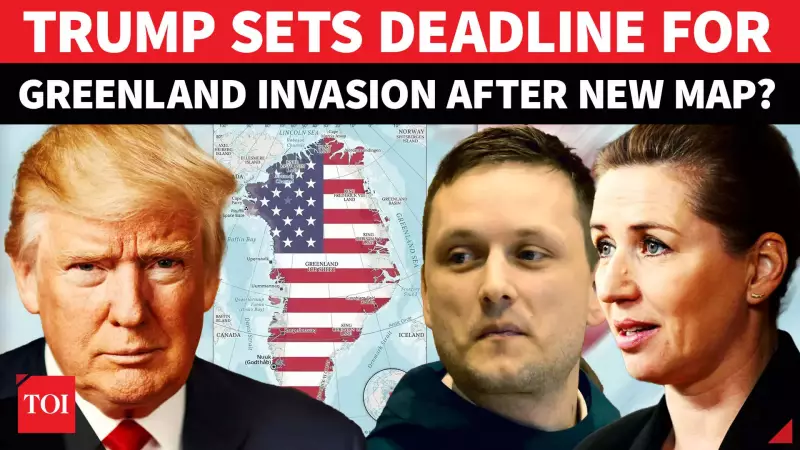
In a move that has sent shockwaves through diplomatic circles, former US President Donald Trump has reignited his controversial campaign to bring Greenland under American control. The renewed push, citing urgent national security needs in the face of expanding Russian and Chinese presence in the Arctic, has been met with a firm and immediate rejection from both Denmark and Greenland's local government. This has precipitated a significant diplomatic rift between the United States and its NATO allies.
The Core of the Controversy: Security Fears in the High North
Central to Trump's argument is the assertion that the United States requires strategic control over Greenland to counter the growing influence of geopolitical rivals in the Arctic region. He has pointed to increased activities by both Russia and China in the resource-rich and strategically vital Arctic waters as a primary justification. The former president frames the potential acquisition of the world's largest island as a necessary step to safeguard American interests and maintain a dominant position in the new great game unfolding at the top of the world.
The proposal, however, is not new. It first surfaced during Trump's previous term, drawing widespread criticism and disbelief. The revival of this idea on January 05, 2026, indicates a persistent strategic priority in certain American political quarters, viewing the Arctic as a critical frontier for future competition.

Flat Rejection and a Strong Ally's Warning
The response from Copenhagen and Nuuk was swift and unambiguous. Both the Kingdom of Denmark, which handles Greenland's foreign and defense policy, and the local Greenlandic government have flatly rejected any talk of annexation or sale. The Danish Prime Minister issued a stern warning, urging Trump to cease threats against a close NATO ally. This public admonishment highlights the severe strain being placed on the transatlantic alliance by such unilateral propositions.
Greenland, while part of the Danish Realm, enjoys a high degree of self-rule. The overwhelming sentiment on the island is for full independence from Denmark in the future, not a transfer of sovereignty to another power. The idea is seen as a colonial-era anachronism and is deeply offensive to the people of Greenland.
Rising Tensions Within the NATO Framework
The incident has led to noticeably elevated diplomatic tensions between the NATO partners. An alliance built on mutual defense and cooperation is now grappling with public discord sparked by territorial ambitions directed at a member's territory. This controversy arrives at a time when Western unity is considered paramount in dealing with global challenges, making the public spat particularly damaging.
Analysts suggest that such moves could potentially weaken the cohesion of NATO, as allies question the reliability and intentions of a major partner. The situation underscores a clash between unilateral, transaction-driven foreign policy and the multilateral, rules-based order that has underpinned Euro-Atlantic security for decades.
Furthermore, the reference to Russian and Chinese expansion serves to frame the Arctic as a zone of confrontation. This could accelerate militarization in a region that has largely been managed through cooperation, notably via the Arctic Council. The fallout from this renewed push extends beyond US-Denmark relations, potentially reshaping the security dynamics of the entire Arctic region.
As of now, the standoff continues. With Greenland and Denmark holding their ground and the proposition remaining on the table from Trump's camp, the diplomatic impasse presents a fresh challenge for NATO's leadership. The episode serves as a potent reminder of how unconventional geopolitical demands can test the resilience of even the most established international alliances.