

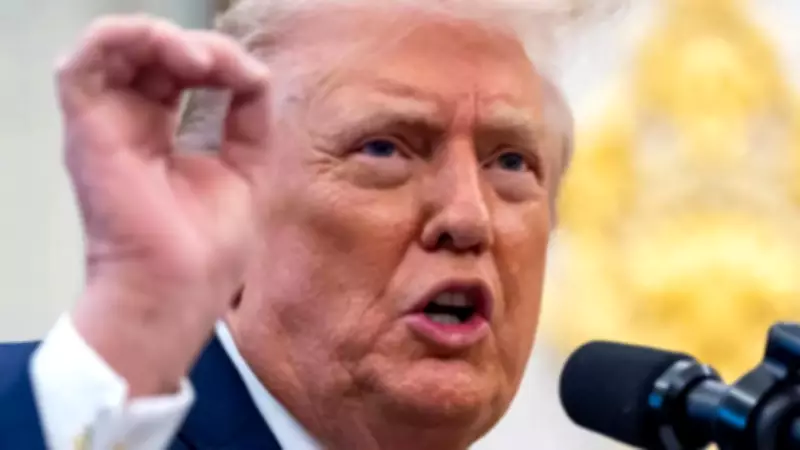
Trump Issues 48-Hour Ultimatum to Iran Over Strait of Hormuz Closure
In a dramatic escalation of tensions, former US President Donald Trump on Sunday threatened military action against Iran if Tehran did not reopen the strategically vital Strait of Hormuz within 48 hours. The ultimatum came amid rising global oil prices and increasing regional instability.
Direct Threat Against Iranian Infrastructure
Through a social media post, Trump declared: "If Iran doesn't fully open, without threat, the Strait of Hormuz, within 48 hours from this exact point in time, the United States of America will hit and obliterate their various power plants, starting with the biggest one first! Thank you for your attention to this matter."
The stark warning represents one of the most direct threats against Iranian infrastructure in recent years and comes as multiple nations have expressed concern about Iran's effective blockade of the critical waterway.

Iran's Forceful Response and Retaliation Warning
Iran responded swiftly through its military command structure. The Khatam Al-Anbiya operational command issued a statement carried by the Fars news agency warning that any attack on Iranian infrastructure would trigger immediate retaliation.
"Following previous warnings, if Iran's fuel and energy infrastructure is violated by the enemy, all energy, information technology, and desalination infrastructure belonging to the US and the regime in the region will be targeted," the statement declared.
This exchange of threats occurs against a backdrop of:
- Over 20 nations issuing a joint statement condemning Iran's de facto closure of the Strait of Hormuz
- Reports of missile tests by Iran, including weapons fired toward Diego Garcia
- The US military repositioning Marines and warships in response to regional developments
- Continued attacks on energy facilities throughout the Middle East
Economic Pressure and Global Oil Markets
The confrontation comes as Trump faces mounting pressure due to sharply rising oil prices this month. The Strait of Hormuz serves as a crucial transit point for approximately 20 percent of the world's oil and gas supplies. Iran's effective blockade, combined with repeated attacks on Middle Eastern energy facilities, has contributed significantly to increasing global fuel costs.
This economic dimension adds urgency to the diplomatic and military standoff, with potential consequences for energy markets worldwide.
Diplomatic Context and Conflicting Statements
Interestingly, Iran's ambassador to the United Nations, Amir Saeid Iravani, stated last week that Tehran did not plan to close the Strait of Hormuz. Speaking to reporters at the UN on Thursday, Iravani emphasized that Iran would not block the vital shipping route while asserting the country's right to ensure its security.
This more measured diplomatic tone contrasted with earlier remarks by Iran's newly appointed supreme leader, Mojtaba Khamenei, who had suggested the strategic waterway could be used as leverage in international negotiations.
The conflicting signals from Iranian leadership create uncertainty about Tehran's actual intentions regarding the strait, even as military threats escalate from both sides.
Regional Implications and Broader Conflict
The exchange of threats occurs within a broader regional context that includes:
- Ongoing tensions between Israel and Iran, with recent reports of Israeli strikes against Iranian targets
- Defensive responses by Gulf nations like the UAE and Kuwait to missile barrages in the region
- Iranians marking Nowruz (Persian New Year) amid heightened security concerns
- Increasing international attention on Iran's military capabilities and regional influence
The situation remains fluid, with the 48-hour deadline creating a potential flashpoint for broader conflict in the already volatile Middle East region.






