Trump Floats Idea of 'Friendly Takeover' of Cuba as Diplomatic Tensions Escalate
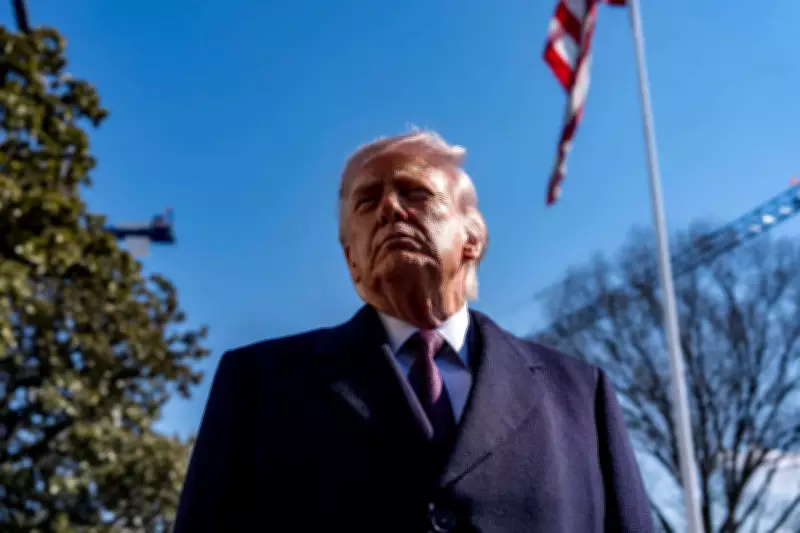
In a striking statement that has captured international attention, US President Donald Trump on Friday suggested the possibility of a "friendly takeover of Cuba," though he did not elaborate on the specific meaning behind this provocative term. His remarks were delivered outside the White House before his departure for Texas, where he addressed reporters amid escalating tensions between Washington and Havana.
High-Level Discussions and Economic Pressures
Trump revealed that Secretary of State Marco Rubio is engaged in "very high-level" discussions with Cuban officials, stating, "The Cuban government is talking with us." He went on to describe Cuba's dire economic situation, noting, "They have no money, they have no anything right now ... maybe we'll have a friendly takeover of Cuba." The President emphasized that such an outcome represents a "real possibility," implying that conditions in the communist-led island nation, long at odds with the US, might be approaching a critical "turning point."
Recent Incident and Investigation
These comments followed a report from Cuban authorities detailing a confrontation off the island's northern coast. According to Havana, a Florida-registered speedboat carrying armed Cuban nationals from the United States engaged with Cuban military forces, resulting in four fatalities, six injuries among those on board, and one injured Cuban official. The clash has drawn significant scrutiny, with US officials, including Rubio, announcing an investigation into the circumstances of the shooting. Homeland Security and the US Coast Guard are involved in the probe, with Rubio describing the encounter as "highly unusual."

Broader Foreign Policy Context
Cuba has been a focal point of Trump's foreign policy since early January, particularly after US forces removed Nicolás Maduro, a key ally of Havana, from power in Venezuela. Trump has suggested that Cuba's economy, already weakened by the cessation of Venezuelan oil shipments, could collapse without direct US intervention. Washington has maintained a strict trade embargo on Cuba since 1962, following the failed Bay of Pigs invasion, yet Trump has indicated that talks with Cuban officials may be underway.
Cuba's government has acknowledged communication with US counterparts after the recent shooting incident but has denied that formal high-level negotiations are taking place. Last month, Trump signed an executive order imposing tariffs on countries supplying oil to Cuba, a move analysts say could exacerbate the island's energy crisis. US authorities later clarified that Venezuelan oil shipments can still be sold to Cuban private-sector buyers under certain conditions.
Cuban Response and Ongoing Challenges
Cuba's deputy foreign minister, Carlos Fernández de Cossío, reiterated on social media that the US fuel embargo remains in effect and continues to act as a form of "collective punishment," asserting that recent developments do not alter this reality. The situation underscores the complex and strained relationship between the two nations, with Trump's latest remarks adding a new layer of uncertainty to diplomatic efforts.