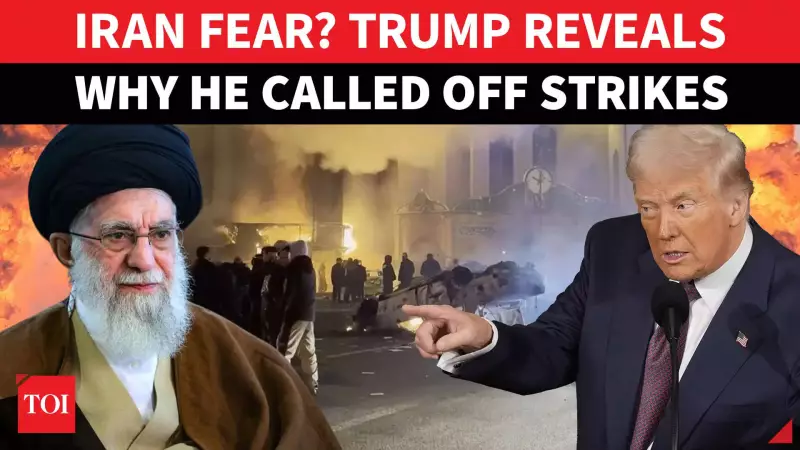
Trump Reveals Decision to Call Off Planned Military Action Against Iran
President Donald Trump has publicly explained his decision to cancel a planned United States military strike on Iran. The announcement comes amid intense speculation about American intentions in the region.
The President's Reasoning
Trump stated that he personally made the call to stand down. He pointed directly to Iran's sudden move to stop mass executions of detained protesters as the key factor. According to the U.S. President, this development on the ground changed the immediate calculus for military action.
The United States had appeared ready to act. Reports indicated a strike was imminent as unrest spread across several Iranian cities. Military assets were reportedly positioned. Then, the operation was abruptly called off, leaving many observers questioning the reasons behind the reversal.

Iran's Forceful Rejection
Tehran has completely rejected President Trump's narrative. Supreme Leader Ayatollah Ali Khamenei has launched a fierce verbal counterattack against Washington.
Khamenei accuses the United States of orchestrating the internal unrest within Iran. He has branded President Trump a 'criminal' in his public statements. The Supreme Leader claims America's true goal is regional domination, not any genuine concern for reform or human rights within Iran.
This exchange highlights the deep and persistent mistrust between the two nations. It underscores how a single event can be interpreted in radically different ways by opposing governments.
Broader Context of Tensions
The incident occurs against a backdrop of long-standing hostility. U.S.-Iran relations have been fraught for decades, marked by sanctions, proxy conflicts, and heated rhetoric.
The possibility of direct military confrontation has loomed large at several points in recent years. This latest episode shows how quickly tensions can escalate, and just as quickly de-escalate, based on decisions made in Washington and Tehran.
Analysts are now watching closely to see if this represents a temporary pause or a more significant shift in strategy. The world continues to monitor a volatile situation that has implications far beyond the borders of the two countries directly involved.