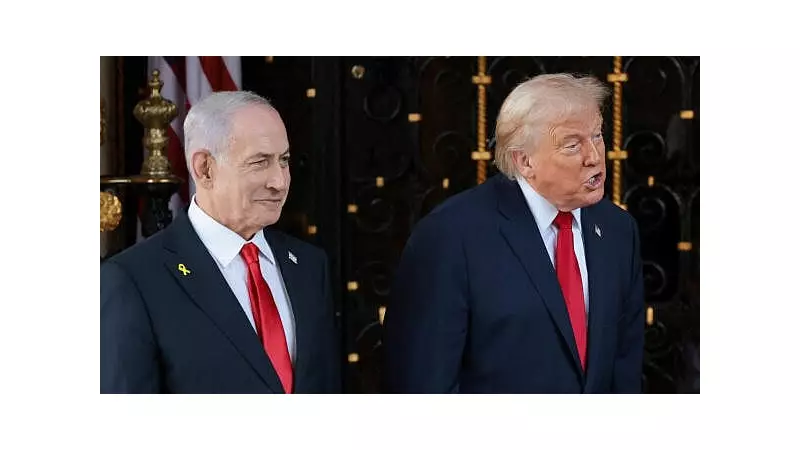
Former United States President Donald Trump has once again positioned himself as a key peacemaker in South Asia, publicly repeating his assertion that he single-handedly averted a major military conflict between India and Pakistan. The latest instance of this claim occurred during a recent meeting with Israeli leader Benjamin Netanyahu.
The Repeated Claim of Averting Conflict
Donald Trump has a history of taking credit for de-escalating tensions between the two nuclear-armed neighbours. During his presidency and in subsequent interactions with global leaders, he has frequently cited his role in stopping what he suggests was an imminent war. The claim resurfaced prominently on 30 December 2025, as reported, during his discussions with former Israeli Prime Minister Benjamin Netanyahu.
While the specific details or timing of the alleged crisis he references are often not elaborated upon by Trump, the core narrative remains consistent: his personal intervention was crucial in preventing a catastrophic clash. This forms part of a broader pattern where the former president highlights his foreign policy achievements, particularly in volatile regions.

Context of a Volatile Region
The relationship between India and Pakistan has been marked by decades of hostility, with several major wars and numerous military standoffs since their independence. The fact that both nations possess nuclear arsenals adds a grave dimension to any escalation, making international diplomacy a critical factor. The region of Kashmir remains a primary flashpoint, often triggering cross-border tensions.
Trump's claims, therefore, tap into deep-seated global concerns about stability in South Asia. By asserting his decisive role, he aims to bolster his image as a leader capable of managing complex international crises. However, these assertions are often met with scrutiny and have been debated by analysts and officials from the involved countries.
Implications and Reactions
The repetition of this claim during a meeting with Netanyahu is significant. It underscores Trump's continued focus on his diplomatic legacy as he engages with other world figures. For audiences in India and Pakistan, such statements renew attention on the fragile state of bilateral relations and the ever-present role of external powers, particularly the United States, in regional dynamics.
Such proclamations also have domestic political resonance. They are crafted to reinforce a specific narrative of strong, deal-making leadership for his political base. The choice of venue—a meeting with another prominent allied leader—serves to amplify the message's reach and perceived credibility.
Ultimately, while the veracity and scope of Trump's personal involvement in specific India-Pakistan crises may be dissected by historians and diplomats, the repeated claim itself has become a fixture in his political rhetoric. It highlights the ongoing geopolitical importance of South Asian stability and how it is leveraged in global political discourse.