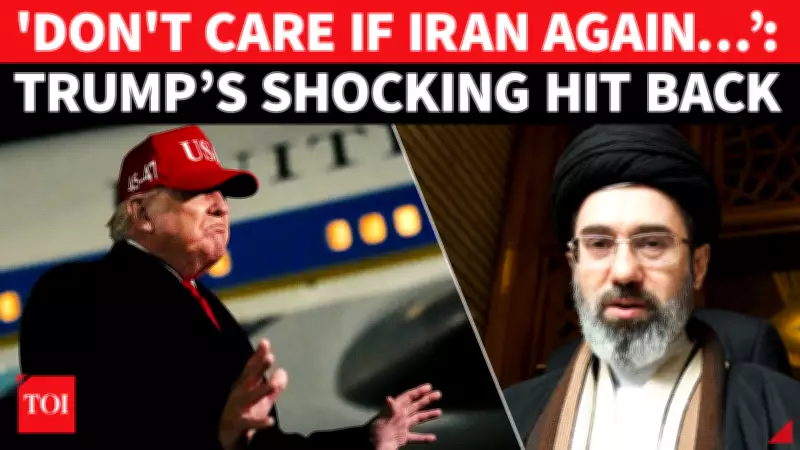
Trump Takes Hardline Stance, Dismisses Need for Further Iran Negotiations
In a bold declaration, former US President Donald Trump has publicly rejected the prospect of additional talks with Iran, emphasizing Washington's perceived upper hand in the ongoing geopolitical standoff. Speaking on April 13, 2026, Trump asserted, "I don't care if they come back or not," signaling a shift away from diplomatic engagement and toward a posture of asserted dominance.
Confident Claims of US Military Superiority Over Iran
Trump projected unwavering confidence in the United States' strategic position, claiming that recent actions have critically weakened Iran's military infrastructure. He stated that Iran's defense capabilities are "gone," with its missile stockpile largely depleted and its drone and missile production capacity significantly crippled. These remarks come amid heightened tensions following stalled ceasefire negotiations in Islamabad, where disputes over the Strait of Hormuz remain a sticking point.
Market Reactions and Global Implications
The defiant rhetoric from Trump has immediate repercussions in global markets, particularly in the energy sector. Oil prices have shot up as investors react to the potential for escalated conflict in the Middle East, a region crucial for oil supply. Analysts warn that any disruption in the Strait of Hormuz, a key chokepoint for maritime trade, could lead to further volatility and economic strain worldwide.

Regional Tensions Escalate Amid Diplomatic Failures
Trump's comments coincide with a series of provocative events:
- Iran has issued warnings, including threats to close the Strait of Hormuz, which it describes as "non-negotiable."
- Pro-Iran groups, such as Hezbollah, have conducted drone attacks into northern Israel, prompting civilian panic.
- US diplomatic efforts, led by figures like Vance, have returned empty-handed from talks, highlighting the deepening rift.
International observers note that Trump's stance may embolden hardliners on both sides, reducing the likelihood of a peaceful resolution. With Israel's Netanyahu also threatening military action against Iran's nuclear sites, the situation remains precarious, risking broader regional instability.