

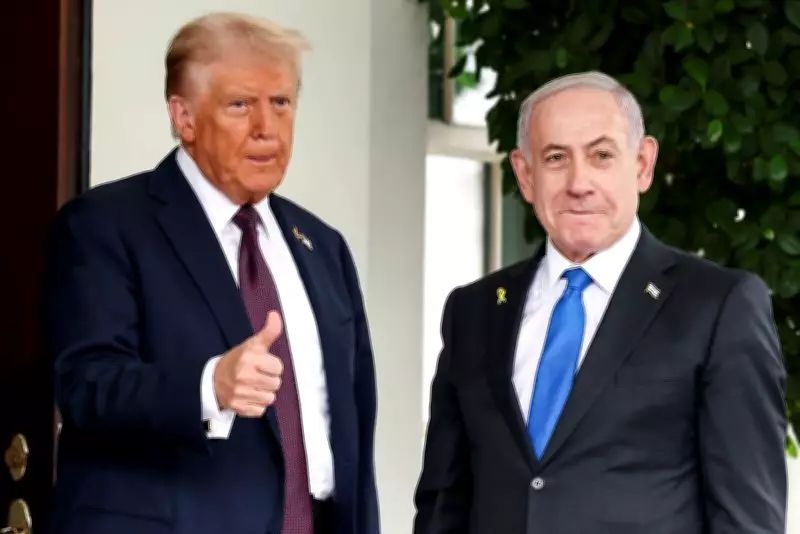
Trump and Netanyahu Split on Gas Field Attack, Raising Questions About War Coordination
President Donald Trump and Israeli Prime Minister Benjamin Netanyahu have exhibited a notable divergence in their public statements regarding Israel's recent attack on a critical Iranian gas field. This marks the most significant difference of opinion between the two leaders since the commencement of the 20-day war against Iran, raising questions about their synchronization in prosecuting the conflict.
Impact of the Gas Field Strike
The Israeli assault on the South Pars gas field, which serves as an energy lifeline for Iran, prompted retaliatory strikes by Iran against energy infrastructure in other Middle Eastern nations. These actions have led to a further surge in already elevated global energy prices. Additionally, Gulf allies have called on Trump to rein in Netanyahu, highlighting regional tensions and the broader economic repercussions of the conflict.
Diverging Public Statements
During an Oval Office meeting with Japanese Prime Minister Sanae Takaichi, Trump explicitly stated that he neither agreed with nor approved of Israel's attack on the world's largest gas field. He remarked, "I told him, 'Don't do that.' We get along great. It's coordinated, but on occasion he'll do something. And if I don't like it -- and so we're not doing that anymore." This public disapproval contrasts sharply with Netanyahu's assertion that Israel "acted alone" in the strike.

Netanyahu, however, sought to downplay any perceived rift, emphasizing his long-standing alignment with Trump on the dangers posed by Iran. At a news conference in Jerusalem, he stated, "It's been said that for 40 years I've been saying that Iran is a danger to Israel and a danger to the world. That is true. You know who else said that? President Trump." He later added, "Look, I don't think any two leaders have been as coordinated as President Trump and I. He's the leader. I'm his ally. America is the leader."
Behind-the-Scenes Coordination and Intelligence Insights
Despite Trump's initial social media post claiming the U.S. "knew nothing" about the attack beforehand, two anonymous sources familiar with the matter revealed that the U.S. was indeed informed of Israel's plans ahead of the strike. One source indicated that Israel's targets are being coordinated with the U.S., suggesting a level of behind-the-scenes collaboration that contrasts with the public discord.
Top U.S. administration officials have argued that Trump remains aligned with Netanyahu but is ultimately guided by U.S. national security interests. Director of National Intelligence Tulsi Gabbard noted to the House intelligence committee that "the objectives that have been laid out by the president are different from the objectives that have been laid out by the Israeli government." This underscores a strategic divergence: the U.S. air campaign focuses on decimating Iran's missile and nuclear programs, while Israel has carried out high-level assassinations aimed at toppling the Islamic authority.
Evolving War Goals and Political Dynamics
Trump has shown a significant evolution in his war objectives, cooling on the prospect of overthrowing Iran's clerical regime—a goal Netanyahu continues to champion. In a Fox News Radio interview, Trump expressed concerns about the feasibility of such a regime change, citing the strength of Iran's paramilitary Basij force. When asked if he agreed with Netanyahu's calls for Iranians to reclaim their country, Trump responded, "I would think that Bibi would understand that too," indicating a nuanced disagreement.
Netanyahu, buoyed by strong domestic support for the war in Israel, frames the conflict as an opportunity to usher in a new era in the Middle East with a more moderate Iranian government. In contrast, Trump has consistently articulated that his primary objective is ensuring Iran "never has a nuclear weapon," reflecting a more focused strategic aim.

Broader Implications for the Conflict
The emergence of daylight between Trump and Netanyahu could significantly shape the balance of the ongoing conflict and any eventual endgame. While Netanyahu has been Trump's most steadfast foreign ally, describing the U.S. as a reliable friend, this public split introduces uncertainty into their coordination. The differing objectives and public statements may influence diplomatic efforts, regional stability, and the trajectory of the war, with potential long-term effects on global energy markets and Middle Eastern geopolitics.





