

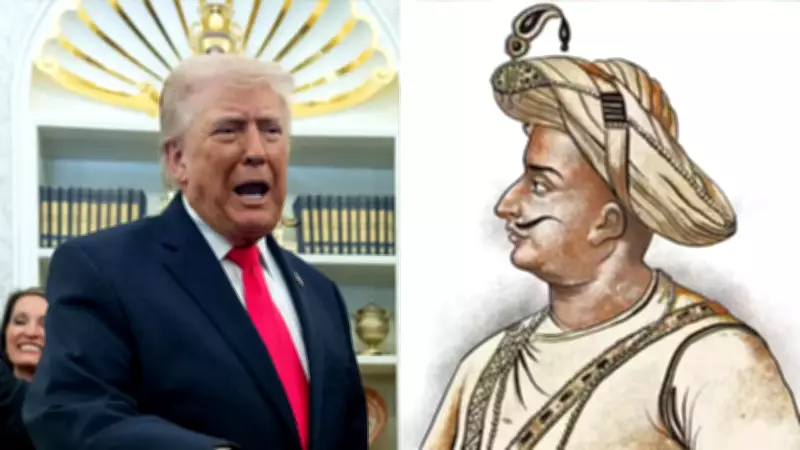
Trump-Macron Feud Exposes Deepening Franco-American Geopolitical Rift
In the historic settings of the White House and the Elysee Palace, the United States and France have transformed their centuries-old alliance into a modern-day diplomatic drama, marked by personal insults and strategic disagreements. The latest strain in this long-standing partnership, which dates back to French support for American independence, emerged not from traditional trade disputes but from a private lunch that turned publicly acrimonious.
Personal Jabs and Diplomatic Snubs
During a closed-door meeting on Tuesday, US President Donald Trump abruptly shifted the conversation from discussions on Persian Gulf naval blockades to the personal life of French President Emmanuel Macron. Mocking Macron's reluctance to fully commit French forces to offensive missions, Trump launched a series of personal attacks, alleging that Macron's wife treats him "extremely badly" and that he was "still recovering from the right to the jaw." These remarks, delivered in a theatrical French accent Trump often uses to ridicule Macron, referenced a viral video of a domestic dispute involving the French leader that has captivated tabloid media.
From the Elysee Palace, Macron responded with characteristic coolness and intellectual disdain. Describing Trump's behavior as "neither elegant nor up to standard," Macron effectively criticized the US president for acting like someone who would put ketchup on a Michelin-starred steak. He emphasized the need for stability and calm, stating in French, "This isn't a TV show!" underscoring his preference for decorum over drama.

Geopolitical Divergence Beneath the Surface
Beyond the personal sniping lies a significant geopolitical divide. While Washington intensifies its aggressive stance toward Iran, Paris advocates for strategic autonomy, with Macron asserting that NATO—an organization Trump often disparages—should function as a "Euro-Atlantic" alliance rather than a tool for American military interventions globally. This policy clash highlights a fundamental disagreement over international norms and the role of alliances in contemporary diplomacy.
Historical Ironies and Lingering Resentments
The current tensions are underscored by historical ironies. In 1778, King Louis XVI of France provided crucial military support to American revolutionaries, including a fleet that helped secure victory at Yorktown, without which the United States might have remained under British colonial rule. However, this French generosity came at a cost, as France diverted resources away from its allies in India, notably failing to support Tipu Sultan of Mysore. This decision inadvertently facilitated British dominance in India, suggesting that American independence was partially financed by the abandonment of Indian allies.
Fast forward to the present, and the Franco-American relationship, once celebrated as a brotherhood of revolutions, now resembles a contentious public divorce. Some in France humorously suggest that the Statue of Liberty, a gift from France, should have included a 250-year return policy given the current discord.
Resilience Amidst Theatrics
Despite the current theatrics, the Franco-American partnership has demonstrated remarkable resilience over time, enduring revolutions, world wars, trade disputes, and even prolonged arguments over cheese. What distinguishes the current moment is not merely the policy differences but the stark contrast in diplomatic styles. Macron champions a language of norms, institutions, and carefully calibrated diplomacy, while Trump operates through rallies, headlines, and impromptu remarks about personal matters. This clash reflects a broader conflict between political cultures rather than just national interests.
The enduring strength of the alliance suggests that, while public spats may capture headlines, the foundational ties between the two nations remain robust, capable of weathering storms as they have for centuries.






