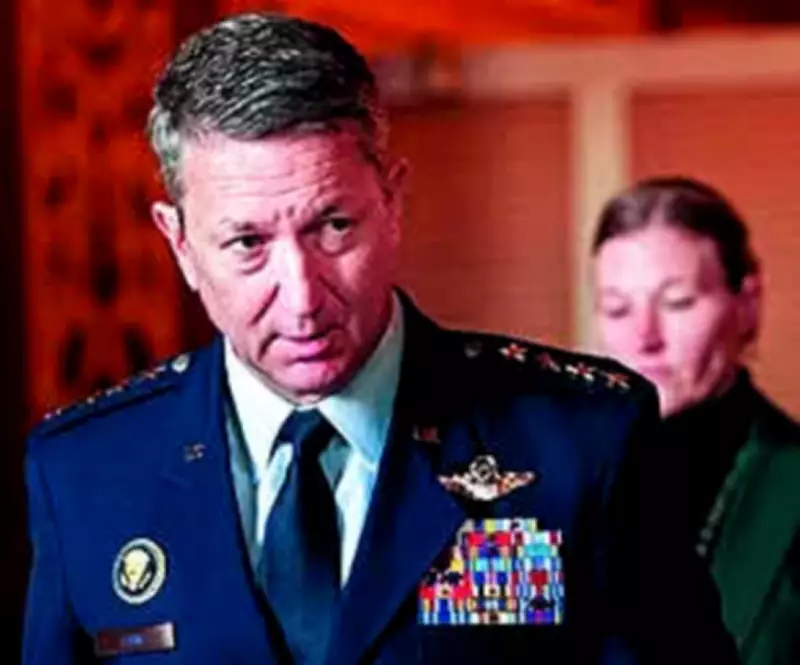
Trump's Assertion on Iran Military Action Ease Disputed by Internal Reports
In a recent social media post, President Donald Trump declared that General Dan Caine, the chair of the joint chiefs of staff, believes any eventual military action ordered against Iran would be "something easily won." However, this statement starkly contrasts with what General Caine has actually communicated in high-level White House meetings, according to individuals briefed on internal administration deliberations.
Contradictory Assessments from Military Adviser
Contrary to Trump's portrayal, General Caine has emphasized that while the United States has amassed forces in West Asia for potential strikes, such operations carry a potentially high risk of American casualties and could negatively impact US weapon stockpiles. He has specifically noted that military actions under consideration in Iran would be significantly more challenging than the successful capture of Venezuelan President Nicolas Maduro last month.
The Delicate Balancing Act of Military Advice
This apparent disconnect highlights the complex role General Caine plays as the president's top military adviser. His responsibility involves presenting the commander in chief with a range of military options, complete with their associated risks and consequences, without explicitly advocating for a particular course of action. A spokesperson for the military's joint staff has declined to comment on these internal discussions.

Context of Trump's Comments and Caine's Actual Position
Trump's social media post appears to have been prompted by reports from The New York Times and other publications detailing military options he is considering if Iran does not abandon its nuclear program. In his post, Trump stated, "General Caine, like all of us, would like not to see war but, if a decision is made on going against Iran at a military level, it is his opinion that it will be something easily won." He further referenced Caine's involvement in Operation Midnight Hammer, suggesting deep familiarity with Iran.
However, during recent White House meetings, General Caine focused on discussing operational capabilities from a military standpoint while consistently refraining from endorsing any specific policy position. This aligns with his standard practice of providing objective analysis rather than personal recommendations.
The discrepancy between Trump's public claims and the private warnings from his military adviser underscores ongoing tensions within the administration regarding potential conflict with Iran. As debates continue, the balancing act between presenting options and avoiding advocacy remains a critical aspect of military-civilian relations in US defense policy.