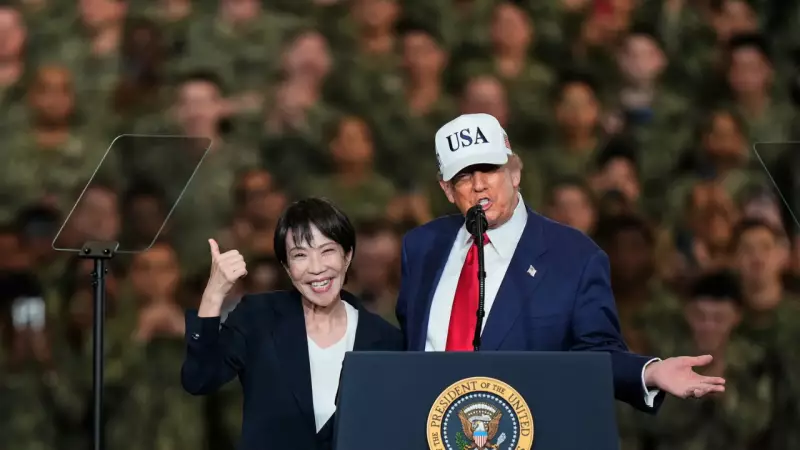
In a significant diplomatic move, US President Donald Trump has extended an invitation to Japanese Prime Minister Sanae Takaichi for an official visit to the United States. The offer was made during a phone conversation between the two leaders on Friday, as confirmed by Japan's foreign ministry.
Details of the Diplomatic Call and Proposed Visit
The phone discussion, which lasted approximately 25 minutes, primarily centred on strategic developments in the Indo-Pacific region. According to statements from Tokyo, both leaders agreed to coordinate arrangements for Prime Minister Takaichi's trip, which is tentatively planned for spring. This would mark her first official journey to the US since she assumed office in October.
Japanese officials have reportedly suggested late March for the visit. The timing could potentially coincide with Washington's famed annual National Cherry Blossom Festival, adding a symbolic layer to the diplomatic engagement. However, the White House has not yet publicly confirmed the details of the call or the invitation, according to the Associated Press.

Strengthening Alliance and Regional Cooperation
Prime Minister Takaichi informed reporters that during the conversation, she and President Trump confirmed the strength of the Japan-US alliance. They mutually agreed to promote a free and open Indo-Pacific and enhance cooperation among like-minded nations. This partnership notably includes the trilateral framework involving Japan, the US, and South Korea.
"At the start of the new year, I consider it extremely significant that I was able to exchange words directly with President Trump and confirm the strong partnership of the Japan-US alliance," Takaichi was quoted as saying by Kyodo News.
The Japanese foreign ministry's statement elaborated that the leaders affirmed their intent to "carve out a new chapter in the history of the Japan-U.S. alliance" in a landmark year for America, which celebrates the 250th anniversary of its independence. Takaichi conveyed her congratulations to Trump on this milestone. As part of the commemorations, Japan has pledged to gift 250 cherry trees to the United States, continuing a tradition that began with Tokyo's gift of trees in 1912.
Backdrop of Regional Tensions and Strategic Stances
The high-level dialogue occurs against a backdrop of heightened regional tensions, particularly concerning Taiwan. Recently, Beijing conducted two-day military exercises in waters near Taiwan. These drills followed the Trump administration's announcement of a proposed arms sales package to Taiwan valued at over $11 billion, a move that drew sharp criticism from China, which claims sovereignty over the island.
Prime Minister Takaichi, Japan's first female premier, had previously stirred controversy in late last year by suggesting that Chinese military action against Taiwan could justify a Japanese military response. This stance marked a departure from the strategic ambiguity maintained by her predecessors and angered Beijing. Following those remarks, President Trump reportedly called Takaichi, describing them as "extremely good friends" and encouraging her to call him anytime.
The upcoming spring visit, if it materialises as planned, will be a crucial opportunity for the two allies to align their strategies further and demonstrate unity in a complex geopolitical landscape.