

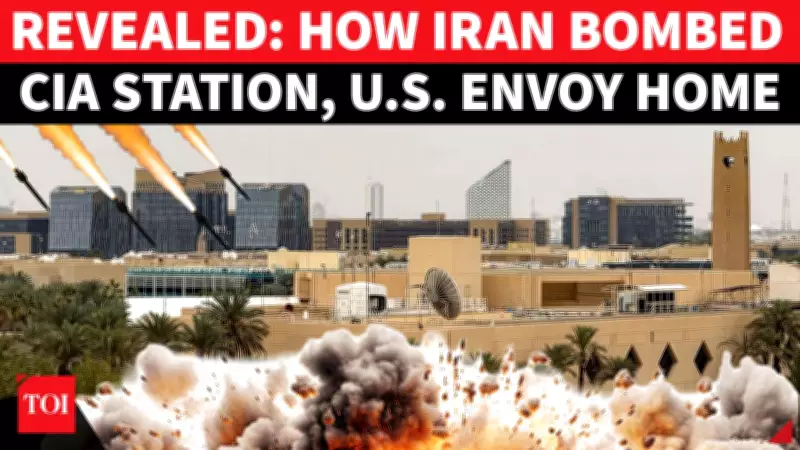
Report Alleges Trump Administration Downplayed Iranian Drone Attack Damage to US Embassy in Riyadh
A recent U.S. media report has raised serious questions about the transparency of the Trump administration regarding a significant security incident in Saudi Arabia. According to the findings, the damage inflicted on the U.S. embassy in Riyadh by Iranian drone strikes was substantially more severe than what was officially disclosed to the public. This revelation points to a potential cover-up of the full extent of the assault's impact on American diplomatic and intelligence assets.
Details of the Night-Time Assault and Its Aftermath
The report details a coordinated night-time attack involving multiple Iranian drones. Intelligence suggests that two drones successfully breached the embassy compound's defenses, striking a highly secure area where hundreds of U.S. diplomatic staff typically conduct their daily operations. Among the critical locations reportedly hit was the Central Intelligence Agency’s station within the embassy, a facility of paramount importance for U.S. intelligence gathering in the region.
The chaos did not end with the initial breach. Hours later, U.S. defense systems intercepted additional drones launched in a follow-up wave. The interception resulted in debris scattering dangerously close to a local preschool, raising immediate concerns for civilian safety. Furthermore, one of the intercepted drones was specifically targeting the residential compound of a top-ranking U.S. diplomat, indicating a deliberate attempt to escalate the attack beyond the embassy grounds.

Implications for U.S. Foreign Policy and Regional Security
This incident underscores the escalating tensions between the United States and Iran, highlighting the vulnerability of American assets abroad to asymmetric warfare tactics like drone strikes. The alleged decision to hide the true scale of the damage could have significant implications for U.S. foreign policy credibility and its strategic posture in the Middle East. It raises critical questions about the assessment of threats to diplomatic personnel and the protocols for public disclosure following attacks on sovereign U.S. territory overseas.
The security of embassies is a cornerstone of international diplomacy, and an attack of this magnitude, coupled with allegations of a cover-up, could strain relations with host nation Saudi Arabia and alter the security calculus for American operations throughout the Gulf region. The report's findings are likely to fuel further debate on the adequacy of current defense measures and the transparency of governmental communications during international crises.






