

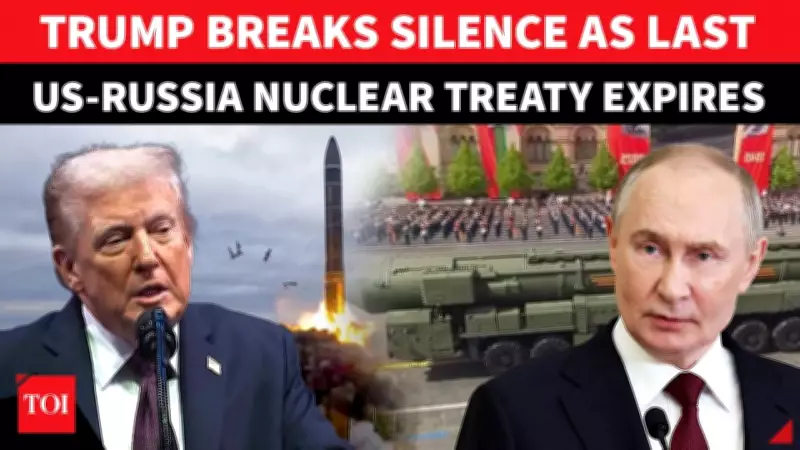
Trump Casts Doubt on 'Badly Negotiated' US-Russia Nuclear Treaty as Expiry Looms
As the New START nuclear treaty reaches its expiration date, the United States and Russia are engaged in a frantic race against time to avert a catastrophic collapse of nuclear arms control mechanisms. Behind closed doors in Abu Dhabi, negotiators from both nations are holding urgent discussions to explore the possibility of a "handshake" arrangement. This informal agreement would allow the continued observation of limits on nuclear warheads, even in the absence of a formal treaty extension.
Political Skepticism and Global Warnings
President Donald Trump has publicly expressed skepticism about the treaty, labeling it as "badly negotiated" and casting doubt on its future viability. This stance has introduced significant uncertainty into the diplomatic process, complicating efforts to secure a stable framework for nuclear disarmament.
Simultaneously, Moscow has issued stern warnings about potential military countermeasures if the treaty collapses entirely. These threats underscore the high stakes involved, as any breakdown in agreements could trigger an escalation in nuclear capabilities and posturing.

China's Role and Expert Concerns
Adding to the complexity, China has firmly refused to participate in any future nuclear arms control deals, citing its own strategic interests and nuclear posture. This refusal removes a key player from the global disarmament landscape, potentially destabilizing efforts to create a comprehensive framework.
Experts are sounding alarms that the world may be entering its most perilous nuclear moment in decades. The combination of treaty expiry, political skepticism from the US, Russian threats, and China's non-participation creates a perfect storm of geopolitical tension.
Implications for Global Security
The potential collapse of the New START treaty raises profound questions about the future of international security:
- Increased Risk of Arms Race: Without binding limits, both the US and Russia might feel compelled to expand their nuclear arsenals, leading to a new arms race.
- Erosion of Strategic Stability: The loss of verification mechanisms could undermine trust and transparency between nuclear powers.
- Global Domino Effect: Other nations might reconsider their own nuclear policies, further complicating disarmament efforts worldwide.
The urgent talks in Abu Dhabi represent a critical juncture. A successful "handshake" deal could provide a temporary reprieve, but long-term solutions will require renewed diplomatic commitment from all major powers. As the clock ticks down, the international community watches closely, aware that the stakes for global peace and security have never been higher.






