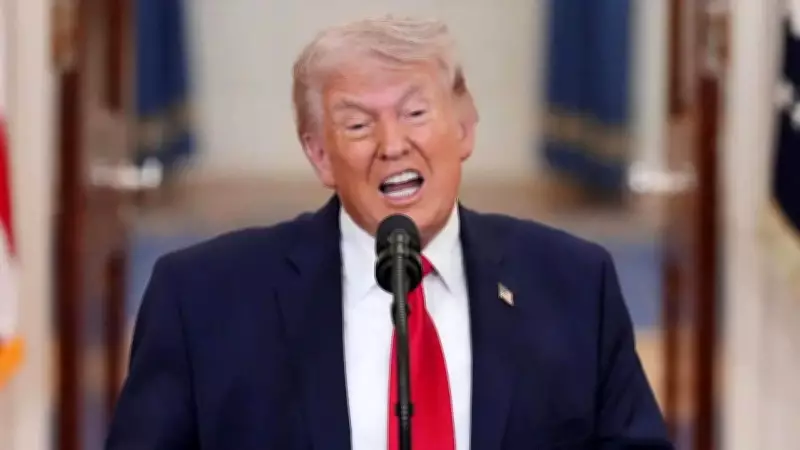
Trump Presses NATO for Concrete Commitments on Securing Strait of Hormuz
United States President Donald Trump has directly communicated to NATO Secretary General Mark Rutte that he expects the alliance to provide concrete commitments within the next few days to assist in securing the critical Strait of Hormuz. This demand, reported by Reuters citing two European diplomats, underscores the escalating pressure on NATO to engage more actively in the volatile West Asia region.
Strained Alliance Over Iran Policy
President Trump's urgent request stems from NATO's deliberate decision to refrain from joining the United States in its military actions against Iran. The alliance has also declined to proactively offer bases or airspace to the US military, a stance that has left American officials exasperated and highlighted deepening fissures within the transatlantic partnership.
The cracks within NATO have widened significantly after the bloc gave a cold shoulder to Washington when Trump sought its involvement in the war against Iran. The US aimed to leverage the Cold War-era alliance to ease Tehran's tightening grip over the Strait of Hormuz, a strategic chokepoint that has severely squeezed global oil supplies.

Fragile Ceasefire and Ongoing Tensions
Despite a last-moment fragile ceasefire being reached between the US and Iran for a two-week period, the strain within NATO persists. Europe has largely kept itself beyond the ambit of the West Asia conflict, maintaining a cautious distance from the escalating hostilities.
Amid the ongoing discord between the United States and other NATO nations, Iran has declared that it will permit no more than 15 vessels per day to pass through the Strait of Hormuz under the terms of the ceasefire agreement negotiated with the United States. This restriction poses a significant challenge to global trade and energy security.
Strategic Importance of the Strait of Hormuz
The Strait of Hormuz is a narrow strip of water, only 34 kilometers (21 miles) wide, situated between Iran and Oman. It serves as the primary passage from the Persian Gulf to the Indian Ocean and is the main route for approximately one-fifth of the world's oil supplies, along with other vital goods such as fertilizers. Since the conflict began at the end of February, Iran has largely shut down this crucial waterway, leading to a sharp surge in global oil prices and disrupting international markets.
Renewed Closure and Escalating Violence
In a concerning development, Iran closed the Strait of Hormuz again on Wednesday in response to Israeli attacks against the Hezbollah militant group in Lebanon. This move casts serious doubt over whether the already precarious ceasefire, intended to end more than a month of war, will hold.
Israel intensified its assaults in Lebanon, striking several commercial and residential areas in Beirut without prior warning. The attacks resulted in at least 112 fatalities and hundreds of injuries, marking one of the deadliest days in the ongoing Israel-Hezbollah conflict. This fresh wave of violence threatens to scuttle what US Vice President JD Vance described as a fragile deal.
Iran's Stern Warning and Regional Implications
General Seyed Majid Mousavi, the aerospace commander of Iran's Revolutionary Guard, issued a stark warning on social media platform X, stating, Aggression towards Lebanon is aggression towards Iran. He indicated that Iranian forces are preparing a heavy response, though specific details were not disclosed.
Israeli strikes targeted multiple commercial and residential zones in central Beirut on Wednesday, causing widespread panic among Lebanese citizens who had initially felt relief following the ceasefire announcement. The Israeli military characterized this as its largest coordinated strike in the current war, hitting over 100 Hezbollah targets within a mere 10 minutes across Beirut, southern Lebanon, and the eastern Bekaa Valley.

Humanitarian Crisis and Diplomatic Divergence
The assault plunged Beirut into chaos, with black smoke towering over several parts of the seaside capital. Explosions disrupted the bustling afternoon, ambulances raced toward open flames, and apartment buildings were struck, exacerbating the humanitarian crisis for the many displaced by the war.
President Trump clarified to PBS News Hour that Lebanon was not included in the ceasefire deal due to the presence of the Lebanese militant Hezbollah group. When questioned about Israel's latest strikes, he remarked, That's a separate skirmish. Israel has asserted that the agreement does not extend to its war with the Iran-backed Hezbollah, although mediator Pakistan has contended that it does, highlighting the diplomatic complexities at play.
The situation remains highly volatile, with the Strait of Hormuz at the center of geopolitical tensions, NATO's unity under strain, and the fragile ceasefire in West Asia hanging by a thread as violence continues to erupt.