Trump Announces Alleged Iran Agreement on Uranium and Hormuz Strait
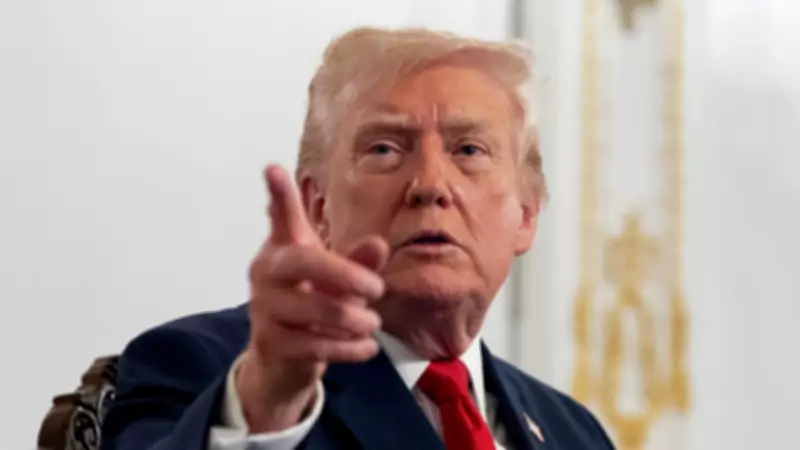
In a series of social media posts on Friday, US President Donald Trump declared that Iran has agreed to relinquish its enriched uranium and reopen the strategically vital Strait of Hormuz. According to reports, this arrangement is in exchange for unspecified rewards and concessions from the United States. The announcement, made by Trump without confirmation or denial from Iranian authorities, has sparked widespread skepticism due to the absence of detailed terms.
Details of the Proposed Uranium Deal
Trump asserted in his posts that the United States will acquire all nuclear "dust" produced by its B2 bombers, emphasizing that no financial transactions will be involved. This statement appears to contradict a prior report from Axios, which suggested Washington was considering a $20 billion cash-for-uranium exchange. In an interview with Reuters, Trump further elaborated that the US plans to enter Iran at a "leisurely pace" to recover the enriched uranium and transport it back to American soil.
While the deal-hungry president seemed to reference uranium entombed by US-Israeli bombing of Iranian nuclear facilities, he made no mention of other critical components such as centrifuges, domain expertise, or the knowledge base that could enable Tehran to resume enrichment activities swiftly. Earlier on Thursday, Trump told reporters at the White House that Iran does not possess nuclear weapons and has "agreed to that... very powerfully." Iran has publicly renounced nuclear weapons on multiple occasions, maintaining its right to a civilian nuclear program under the Nuclear Non-Proliferation Treaty (NPT).

Trust Issues and Iranian Demands
Distrust of Tehran's commitments lies at the core of the US-Israeli attacks on Iran, and Trump's claim of an imminent deal offered no clarity on resolving this fundamental issue. Iran has consistently demanded the removal of sanctions, the return of its frozen assets by the US, and reparations for damages caused by US and Israeli military actions. Notably, Trump's triumphant social media posts did not address any of these demands.
Regional Implications and International Reactions
Trump also contested Iranian assertions that reopening the Strait of Hormuz is contingent on a ceasefire in Lebanon, stating, "This deal is in no way subject to Lebanon, either, but the USA will, separately, work with Lebanon, and deal with the Hezbollah situation in an appropriate manner." He provided assurance that "Israel will not be bombing Lebanon any longer," issuing an implicit warning that Tel Aviv promptly ignored.
In his posts, Trump expressed gratitude to Pakistan, Saudi Arabia, Qatar, and the UAE for their assistance, while snubbing NATO for its lack of support. He criticized the alliance as a "Paper Tiger," highlighting a growing trans-Atlantic rift that has strained relations with key European nations like the UK, France, Germany, Spain, and Italy.
Domestic Skepticism and Media Criticism
Despite Trump's effusive praise for international allies, skepticism runs deep within the American media and commentariat due to the deal's lack of specifics and the president's penchant for grandstanding. Trump lashed out at what he termed "fake news," accusing critics of desperately seeking reasons to undermine his efforts on Iran. He challenged them to acknowledge his achievements and regain credibility.
Overall, while Trump's announcement suggests a potential breakthrough in US-Iran relations, the absence of confirmed details and Iranian verification leaves many questions unanswered, fueling ongoing debate and uncertainty.