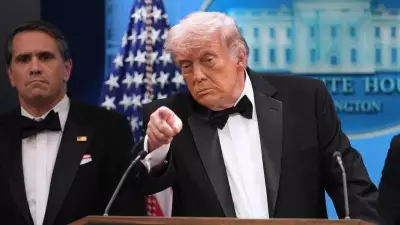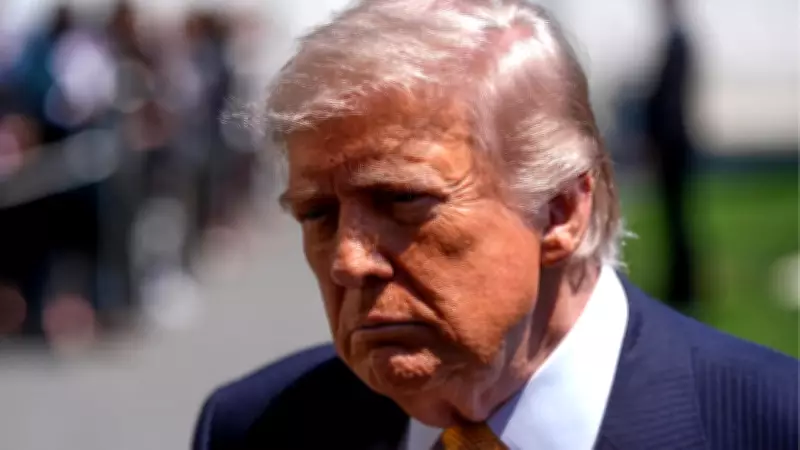
US President Donald Trump stated on Tuesday that the financial struggles of Americans would not influence his approach to negotiations aimed at ending the war with Iran, emphasizing that preventing Iran from acquiring a nuclear weapon remains his top priority.
Trump's Stance on Iran Negotiations
When asked by a reporter whether Americans' financial situation was motivating him to pursue a deal, Trump replied, "not even a little bit." He elaborated, "The only thing that matters, when I'm talking about Iran, they can't have a nuclear weapon." Trump made these remarks as he departed the White House for a trip to Beijing. "I don't think about Americans' financial situation. I don't think about anybody. I think about one thing: We cannot let Iran have a nuclear weapon. That's all. That's the only thing that motivates me," he added.
White House Clarification
White House Communications Director Steven Cheung clarified the president's remarks, stating that Donald Trump's "ultimate responsibility is the safety and security of Americans." Cheung added, "Iran cannot have a nuclear weapon, and if action wasn't taken, they'd have one, which threatens all Americans."

Political Pressure and Economic Concerns
Trump is facing increasing pressure from fellow Republicans who are concerned that the economic fallout from the war could trigger a political backlash against the party. This could jeopardize Republican control of the House of Representatives and potentially the Senate in the November elections. Rising energy costs linked to the Iran conflict have driven up gasoline prices and added to inflationary pressures in the United States. Data released on Tuesday showed that US consumer inflation in April recorded its sharpest increase in three years.
National Security vs. Economic Factors
Donald Trump has framed his approach to the conflict as a matter of national and global security, signaling that economic concerns are secondary to preventing nuclear proliferation. However, US intelligence assessments indicate that the estimated time Iran would need to build a nuclear weapon has remained largely unchanged since last summer, according to three sources familiar with the matter. Analysts had previously estimated that joint US-Israeli strikes had extended the timeline to between nine months and a year. The assessments of Tehran's nuclear program have reportedly remained broadly consistent even after two months of war.