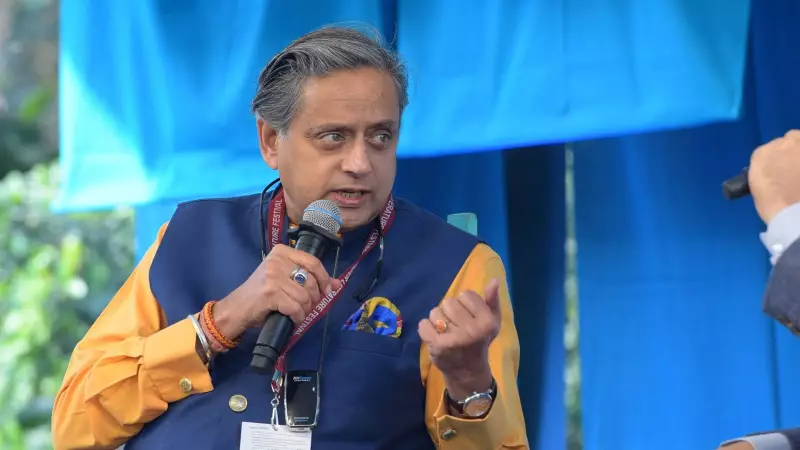
Senior Congress leader and Chairman of the Parliamentary Standing Committee on External Affairs, Shashi Tharoor, has issued a stark warning about the deteriorating law and order situation in Bangladesh. In an interview, Tharoor stated that 'unruly elements are running amok' in the neighbouring country and called for decisive action from the interim government led by Nobel laureate Mohammad Yunus.
Violence Erupts After Youth Leader's Death
The comments come in the wake of large-scale violence that shook Bangladesh on Friday, December 21, 2025. The unrest was triggered by the death of a youth leader, Osman Hadi, in a Singapore hospital about a week after he was shot. The incident led to widespread arson and attacks on media outlets.
In a deeply troubling episode, a Hindu man was lynched by a mob during the violence. Tharoor highlighted this case, noting that the killing stemmed from a false accusation of blasphemy in what was actually a work-related dispute. 'This is the kind of intolerance that is beginning to rear its ugly head,' Tharoor said, raising serious questions about the safety of minorities in Bangladesh.

A Failure of Governance and Rise of Mobocracy
Tharoor analyzed the situation as a reflection of empowered lawless elements that former Prime Minister Sheikh Hasina had managed to curb. He described the current state as 'mobocracy' or 'ochlocracy', where the street is bypassing the government.
'Events of yesterday essentially show a kind of mob rule... Today's statement from the government is pleading with these people to behave and is condemning these things as if it is a helpless observer,' Tharoor remarked. He expressed disappointment that the interim government's response has been limited to condemnation.
The Congress MP emphasized that concrete action is needed, including exemplary punishment for perpetrators and efforts to rein in disruptive forces, using force if necessary. He questioned whether interim head Mohammad Yunus has the appetite for such firm measures, given that Hasina's earlier attempts to curb protests spiralled out of control and contributed to her ouster.
Call for Action and India's Diplomatic Role
Tharoor directly appealed to the interim administration in Dhaka. 'I would urge the interim government to take matters more firmly in its hand. I hope our government is also conveying the same message,' he stated. He argued that as a globally respected figure, Yunus cannot merely wring his hands and offer apologies; he must take decisive steps to prevent recurrences.
On India's role, Tharoor clarified that while New Delhi cannot interfere in Bangladesh's internal affairs, it can use its diplomatic influence to persuade the Yunus government to take constructive steps. He also voiced concern over inflammatory speeches from Bangladeshi student leaders threatening India's territorial integrity, stating such voices are disquieting.
Regarding the strong demand from protesters and the Yunus government for the return of ousted PM Sheikh Hasina to Bangladesh, Tharoor noted that the Indian government is studying the issue with all legal and political considerations. He acknowledged the complexity of the decision, given India's long-standing relationship with Hasina and existing treaties.
Tharoor concluded by warning that the ongoing lawlessness and intimidation could severely undermine the prospects for free and fair elections in Bangladesh, a process India has supported.