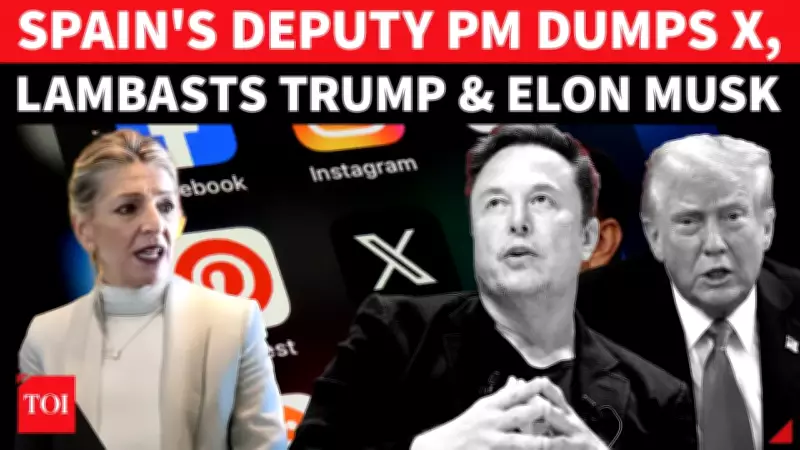
Spain's Deputy Prime Minister Makes Blistering Exit from X, Denouncing It as 'Place of Hate'
In a bold and unprecedented move, Spain's Deputy Prime Minister Yolanda Díaz has publicly announced her departure from Elon Musk's social media platform X, delivering a scathing critique of the platform's environment. Díaz branded X as "a place of hate", sparking a renewed and intense debate across Europe regarding the role of digital platforms in modern democracy.
A Strong Rebuke Against Tech and Political Influence
In her striking statement, Díaz made it clear that Spain and Europe are "not vassals of Elon Musk or Donald Trump", marking one of the most forceful rebukes by a sitting European leader against the growing influence of tech moguls and political figures in global affairs. This declaration underscores a broader concern over the accountability and power wielded by major digital platforms, which are increasingly shaping political discourse and public opinion.
Background and Implications of the Exit
The exit follows Díaz's earlier withdrawal from the platform, which was prompted by mounting concerns over Musk's conduct and the political direction of X. Her decision to make a public statement now reignites critical discussions on several fronts:

- Hate Speech: Díaz's labeling of X as a hub for hate speech highlights ongoing issues with content moderation and the spread of harmful rhetoric online.
- Accountability: The move calls into question the responsibility of tech companies in regulating their platforms and preventing abuse.
- Democratic Life: It raises alarms about the impact of digital platforms on democratic processes, including election integrity and public debate.
This incident is part of a larger trend in Europe, where leaders and policymakers are grappling with how to balance free expression with the need to combat online toxicity. Díaz's exit serves as a catalyst for further action, potentially influencing regulatory measures and public sentiment towards social media giants.
Europe's Stance on Digital Sovereignty
By asserting that Europe is not subordinate to figures like Musk or Trump, Díaz emphasizes the continent's push for digital sovereignty. This involves greater control over data, technology, and online spaces to protect democratic values and national interests. The statement resonates with broader European efforts to curb the dominance of American tech companies and foster a more regulated digital ecosystem.
As the debate intensifies, Díaz's departure from X is likely to inspire similar actions from other political figures and citizens, challenging the status quo of social media's role in society. It underscores a pivotal moment in the intersection of technology, politics, and ethics, with far-reaching implications for global governance and digital rights.