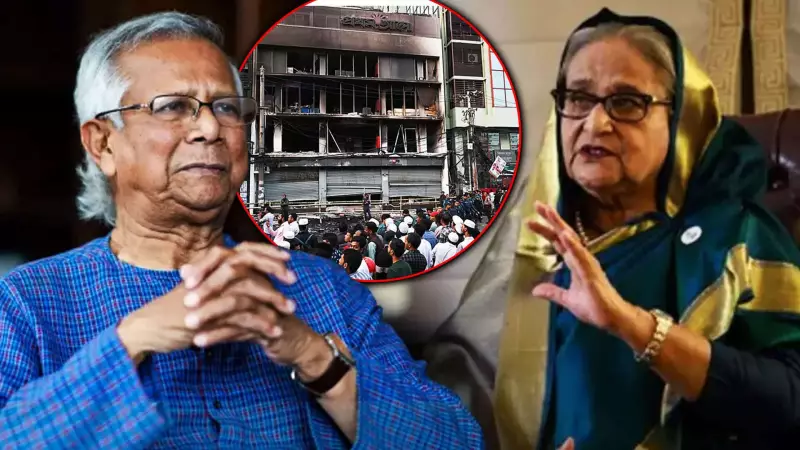
In a sharp critique of the current political climate in Bangladesh, former Prime Minister Sheikh Hasina has launched a direct attack on the interim government led by Nobel laureate Muhammad Yunus. Hasina, who leads the Awami League, has pointed to rising violence and a breakdown of law and order as signs of a collapsing administration.
Governance Collapse and Political Instability
The criticism from the former leader comes in the wake of a tragic incident: the death of student leader Sharif Usman Hadi. Hasina asserts that such events are not isolated but are symptomatic of a broader governance failure that has escalated since her government was removed from power. She argues that this instability is not only harming Bangladesh internally but is also damaging its crucial relationships with neighboring countries.
Sheikh Hasina explicitly warned that holding national elections without the participation of her Awami League party would be nothing more than a "coronation." She believes this would effectively disenfranchise millions of the party's supporters and raise serious questions about the legitimacy of any government formed under such circumstances.

Diplomatic Front: India's Role and "Hostile Statements"
A significant portion of Hasina's address focused on foreign relations, particularly with India. She expressed deep gratitude for India's continued support and hospitality towards her. More importantly, she countered what she described as "hostile statements against India" emanating from the current interim setup in Dhaka.
Hasina emphasized that strong and friendly ties with New Delhi are non-negotiable for Bangladesh's prosperity. She highlighted that this partnership is fundamental for trade, regional stability, and maintaining Dhaka's credibility on the international stage. Her comments are seen as a direct rebuttal to elements within the current administration that have taken a harder line against India.
Extradition Demands and Political Motives
Further escalating her confrontation with the Yunus-led caretaker government, Hasina dismissed its extradition demands as politically motivated. She framed these legal moves as tools of political persecution rather than genuine judicial processes, aiming to undermine her and her party's standing.
By linking internal lawlessness with diplomatic missteps, Hasina painted a picture of an interim government that is failing on both domestic and international fronts. Her statements, made on December 22, 2025, serve as a powerful rallying cry for her supporters and a stark warning about the direction in which the country is headed under its current leadership.
The former Prime Minister's forceful intervention underscores the deep political divisions in Bangladesh. It sets the stage for a contentious pre-election period where the issues of governance, legitimacy, and foreign policy alignment will be fiercely debated.