Supreme Court to Hear Noida Authority and Delhi Jal Board Challenge Against NGT's Rs 150 Crore Fine
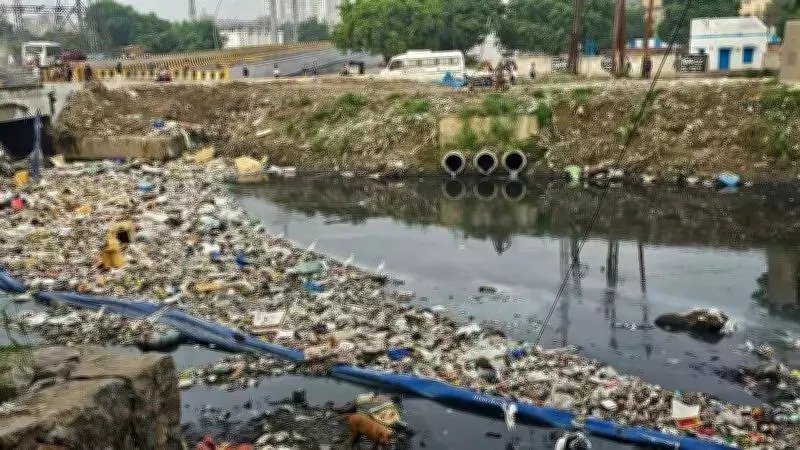
The Supreme Court is scheduled to hear a plea on Tuesday filed by the Noida Authority and the Delhi Jal Board (DJB), challenging the National Green Tribunal's (NGT) imposition of a Rs 150 crore environmental compensation. This penalty was levied over alleged sewage discharge into the Kondli irrigation canal, marking a critical juncture in a long-standing environmental dispute.
Case History and Previous Hearings
This hearing represents the third listing since January 21, as the apex court has previously adjourned the matter. On earlier occasions, the state government's counsel requested additional time, leading to delays. The case was most recently listed on February 4, but the hearing was again postponed due to unpreparedness of the counsel.
The legal battle stems from an NGT judgment in August 2022, which was initiated by an application from environmentalist Abhisht Kusum Gupta. Following the tribunal's order, the Noida Authority faces a penalty of Rs 100 crore, while DJB has been directed to pay Rs 50 crore. In response, both entities moved the Supreme Court to contest the ruling.

Supreme Court's Interim Measures and CPCB Findings
While staying the NGT's direction, the Supreme Court instructed Noida to comply with the tribunal's directives, specifically to establish functional Sewage Treatment Plants (STPs) to prevent the flow of untreated water into the Kondli canal. As part of its scrutiny, the court tasked the Central Pollution Control Board (CPCB) with verifying Noida's claims regarding sewage treatment and discharge.
CPCB's investigation revealed uneven compliance across Noida's eight operational STPs. Only three STPs—located in Sector 168 (50 MLD), Sector 123 (80 MLD), and Sector 54 (54 MLD)—fully complied with discharge norms set by the UP Pollution Control Board. The remaining five STPs were non-compliant on one or more parameters.
In an affidavit, CPCB reported that all eight STPs met discharge limits for pH and total suspended solids (TSS). However, compliance was lower for other critical indicators: only four STPs adhered to biochemical oxygen demand (BOD) limits, a key measure of organic pollution, while seven met the faecal coliform limit.
Assessment of Wetlands and Drain Discharge
CPCB also evaluated three in-situ wetlands constructed in the Noida drain. At the Sector 50/51 wetland, samples indicated higher concentrations of COD, BOD, TSS, PO–P, and NH3-N at the outlet compared to the inlet. Similarly, the wetland near NSEZ, Dadri Crossing, showed elevated COD and BOD levels at the outlet. The wetland near Advant tower in Sector 142 demonstrated removal efficiencies of 25.9% for BOD, 28.2% for COD, and 35.4% for TSS.
Further sampling of the drain just before it discharges into the Yamuna River revealed high BOD concentrations, suggesting the discharge of inadequately treated or untreated wastewater.
Recent Developments and Court Directives
On December 3 last year, the Supreme Court directed CPCB to collect fresh samples from all eight STPs and the wetlands within two weeks, analyze them, and submit a new report. The court noted that previous data, collected on October 15, 2025, during an extended rainy season with high flows, might not accurately reflect ground reality and was unclear regarding compliance with norms.
A division bench of Justices Manoj Mishra and Joymalya Bagchi emphasized the need for a better affidavit to clarify whether the analytical results from Shriram Institute for Industrial Research conform to prescribed norms. During the January 21 hearing, CPCB presented a fresh report, but the state government counsel sought time to respond, leading to another adjournment.
The upcoming hearing is crucial as it will determine the future of the environmental compensation and the measures required to address sewage pollution in the region.