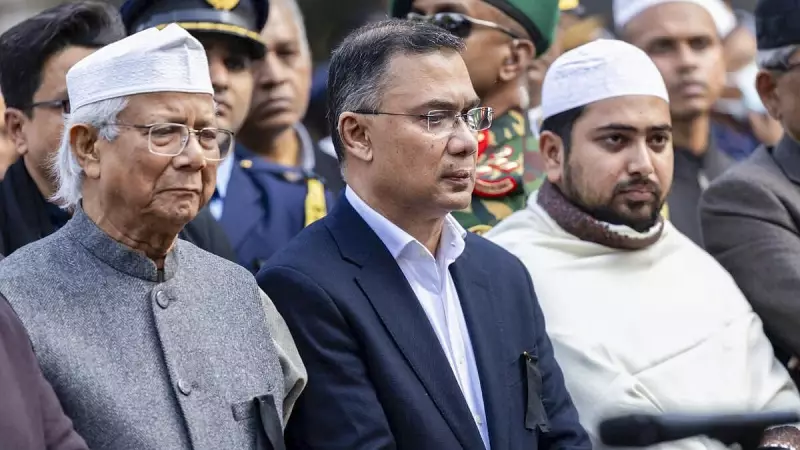
The spirit of regional cooperation was palpable in Dhaka on Wednesday as leaders from across South Asia gathered to pay their final respects to former Bangladesh Prime Minister Begum Khaleda Zia. The high-profile funeral attendance underscored a moment of shared grief and solidarity within the neighbourhood, with observers noting the 'SAARC spirit' was very much alive.
Regional Dignitaries Converge on Dhaka
The funeral ceremony, held on Wednesday, 1st January 2026, became a significant diplomatic event. The most prominent foreign representative was India's External Affairs Minister, Dr. S. Jaishankar, who led the Indian delegation. His presence was seen as a strong gesture of respect and neighbourly empathy from New Delhi.
Alongside the Indian minister, top leaders and dignitaries from other SAARC (South Asian Association for Regional Cooperation) member nations also attended the solemn proceedings. The collective presence of these leaders transformed the funeral into a powerful symbol of South Asian unity during a moment of national loss for Bangladesh.

A Moment of Shared Grief and Reflection
The gathering went beyond formal diplomacy, reflecting a deep sense of shared history and regional kinship. Nobel laureate Muhammad Yunus captured this sentiment, remarking that the 'SAARC spirit' was alive as the region collectively shared Bangladesh's sorrow. This observation highlighted how the event transcended political differences, focusing instead on common humanity and respect for a major political figure's passing.
Khaleda Zia, a towering figure in Bangladeshi politics who served as the country's Prime Minister, commanded respect across party lines and national borders. Her funeral provided a rare occasion for regional counterparts to set aside geopolitical complexities and honour her legacy and contributions to the nation.
Implications for Regional Diplomacy
The unified display at the funeral has potential positive implications for regional diplomacy. Such gatherings can act as informal channels for dialogue, helping to build trust and foster a more collaborative environment among neighbouring states. The visible demonstration of respect by India, through its senior minister's attendance, is particularly significant in the context of the historically important India-Bangladesh relationship.
Analysts suggest that events like these reinforce the personal and human connections between leaders, which can be crucial for navigating complex bilateral and multilateral issues in the future. The collective mourning in Dhaka served as a reminder of the deep cultural and social threads that bind the South Asian region together, even amidst periodic political tensions.
Ultimately, the funeral of Begum Khaleda Zia was not just a national event for Bangladesh but a poignant South Asian moment. It demonstrated that the foundational ideals of the SAARC forum—cooperation and shared destiny—can find expression during times of both celebration and grief, offering a glimmer of hope for enhanced regional camaraderie.