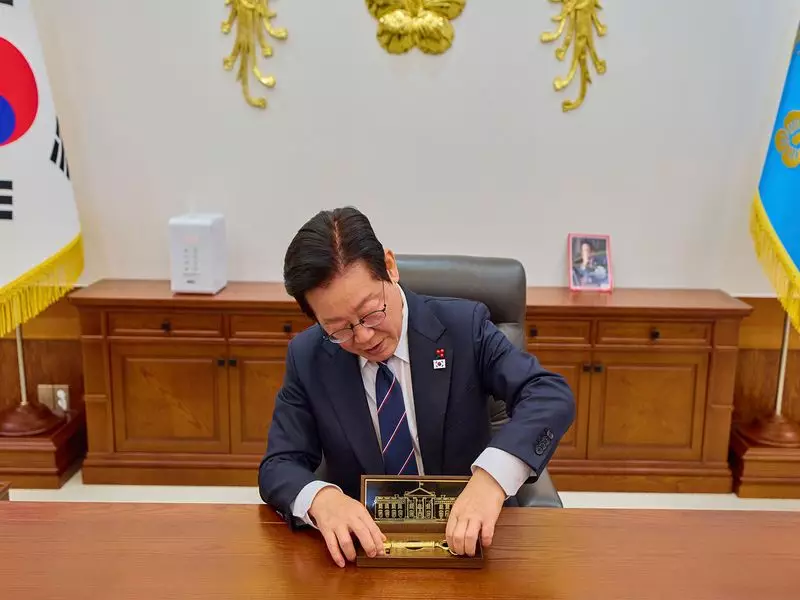
In a significant diplomatic move ahead of his official state visit, South Korean opposition leader Lee Jae-myung has publicly reaffirmed his commitment to the One-China policy. This stance aligns with Beijing's position on Taiwan, which it considers an inalienable part of its territory.
A Crucial Meeting in Beijing
The reaffirmation came during a meeting with Liu Jianchao, the head of the International Department of the Chinese Communist Party's Central Committee. The high-level talks took place in Seoul on a pivotal Tuesday, setting the stage for Lee's upcoming journey to China. Lee Jae-myung, who leads the Democratic Party of Korea, is scheduled for a state visit from July 1st to 4th. This visit is poised to be a key moment in bilateral relations, focusing on enhancing parliamentary exchanges and broader cooperation between the two nations.
Strengthening Parliamentary and Strategic Ties
During the discussions, both leaders emphasized the importance of robust communication and collaboration. Liu Jianchao highlighted the critical role of legislative bodies in fostering stronger international partnerships. The dialogue underscored a mutual desire to elevate the strategic cooperative partnership that exists between South Korea and China. This involves not just high-level political dialogue but also practical cooperation across various sectors for mutual benefit.

Lee Jae-myung's clear support for the One-China principle is a central pillar of this diplomatic engagement. By acknowledging that Taiwan is an integral part of China, Lee aligns his party's foreign policy stance with a core interest of Beijing. This position is consistent with the official stance of many countries, including India, which maintains a One-China policy while simultaneously pursuing robust economic and cultural ties with Taiwan.
Implications for Regional Diplomacy
This development carries considerable weight for regional geopolitics. Lee Jae-myung's pre-visit statement is seen as a diplomatic gesture to ensure a productive and smooth dialogue with Chinese leadership. It aims to build trust and create a positive atmosphere for discussions on complex issues, including trade, regional security, and the situation on the Korean Peninsula.
The visit and the reaffirmed stance occur within a delicate global context where major powers are carefully navigating their relationships. For South Korea, balancing its deep economic ties with China and its vital security alliance with the United States remains a constant strategic challenge. Lee's upcoming trip and his clear position on the One-China policy will be closely watched by analysts and policymakers worldwide for signals about the future direction of Northeast Asian diplomacy.
As the head of the main opposition party and a prominent political figure, Lee Jae-myung's foreign policy positions are influential. His upcoming state visit to China, framed by this reaffirmation, is expected to play a role in shaping the parliamentary and people-to-people dimensions of the crucial South Korea-China relationship.