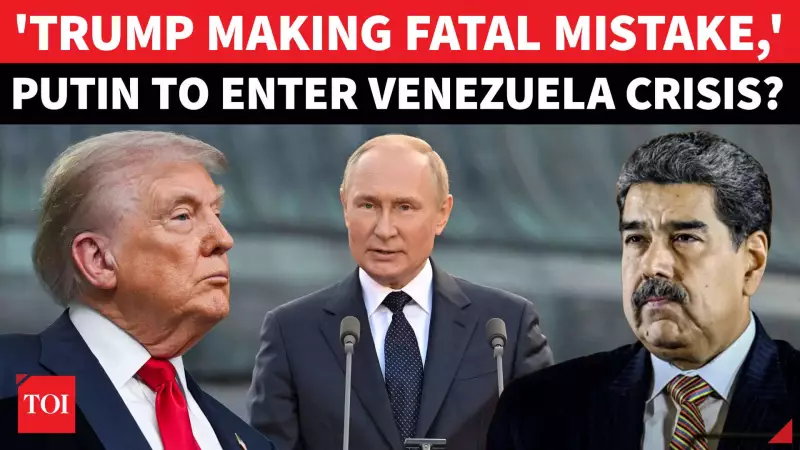
In a significant diplomatic intervention, Russia has issued a stark warning to the United States amid escalating tensions with Venezuela, framing the situation as potentially "fatal" for President Donald Trump's administration if mishandled. The warning came directly from the Russian Foreign Ministry, urging a return to rational diplomacy to avert a dangerous conflict.
Moscow's Direct Appeal for Restraint
Russian Foreign Ministry spokeswoman Maria Zakharova addressed the media in Moscow on December 19, 2025. She explicitly called on both Washington and Caracas to maintain open channels of dialogue. Zakharova accused the United States of pursuing a path of "deliberate and continuous escalation" in the region, a move she described as highly destabilizing.
Central to Russia's concerns are recent U.S. military deployments in the Caribbean Sea. Zakharova characterized these movements as a direct threat to the safety of international maritime navigation. The Russian official stated that Moscow expects President Trump to adopt a "rational approach" and choose the path of diplomacy over military posturing.

Unwavering Support for Maduro, Dismissal of Opposition
Reaffirming its long-standing alliance, Russia threw its full weight behind Venezuelan President Nicolás Maduro. Zakharova dismissed the prominent Venezuelan opposition figure, Maria Corina Machado, labeling her as merely another Western-backed "project" aimed at destabilizing the sovereign government in Caracas.
This strong statement of support comes at a critical juncture. The standoff between the U.S. and Venezuela is intensifying on multiple fronts, including disputes over Venezuela's vast oil resources, the status of seized Venezuelan assets abroad, and the increasing pressure from U.S. military maneuvers near Venezuelan territory.
A Broader Geopolitical Flashpoint
The Russian intervention transforms the U.S.-Venezuela dispute into a more complex geopolitical flashpoint, reminiscent of Cold War-era proxy dynamics. By framing the potential consequences as "fatal for Trump," Moscow is not just commenting on regional stability but also on the domestic political stakes for the American president.
Analysts suggest that Russia's public warning serves multiple purposes: it solidifies its strategic partnership with Venezuela, challenges U.S. influence in Latin America, and positions Moscow as a vocal advocate for multilateral diplomacy and national sovereignty. The call for dialogue is seen as an attempt to prevent a unilateral U.S. action that could redraw the regional balance of power.
The international community is now watching closely to see if the U.S. heeds this public call for de-escalation or if the warnings from Moscow further complicate an already volatile situation centered on oil, assets, and military might.