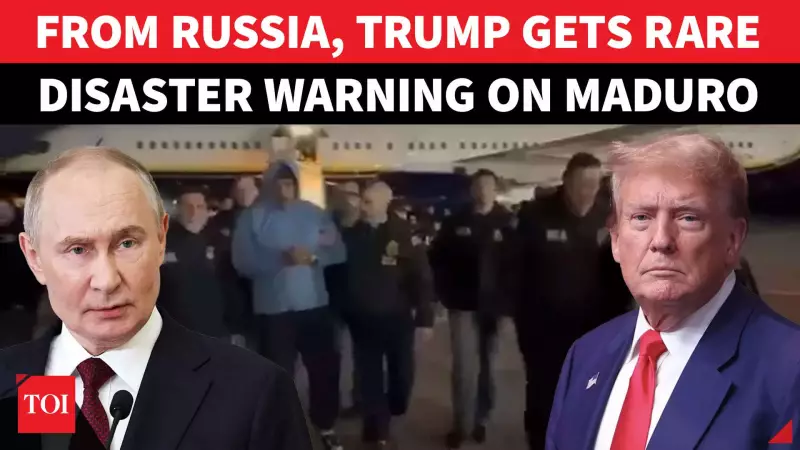
In a dramatic escalation of diplomatic tensions, Russia has delivered a severe warning to the United States, stating that Washington's military action in Venezuela and the subsequent capture of President Nicolás Maduro risk spiraling into a full-blown disaster. The stark caution was issued on January 6, 2026, drawing immediate parallels to America's controversial military past.
Pushkov's Scathing Historical Comparison
Russian Senator Alexey Pushkov led the charge, directly comparing the US operation in Venezuela to its previous interventions in Iraq, Afghanistan, and Libya. He argued that in those conflicts, early proclamations of victory quickly dissolved into years of prolonged conflict, chaos, and instability. Pushkov accused the United States of blatantly violating established international norms and reviving a form of 19th-century imperialism in the Western Hemisphere. He characterised the US approach as a reckless "Wild West" strategy, undermining sovereignty and global order.
The Context of Crisis in Venezuela
This forceful Russian statement comes at a critical time. Venezuela is currently under a state of emergency following targeted US military strikes. The capture of Maduro, a long-time ally of Moscow, has significantly heightened geopolitical stakes. Russia's message is clear and ominous: what the US administration celebrates as a tactical victory today may become a source of severe strategic headache tomorrow. The warning implies potential for a protracted guerrilla conflict, regional destabilisation, and a new Cold War-style proxy standoff.

Implications and the Road Ahead
The Russian warning is not merely rhetorical; it signals a firm alignment against US actions and a potential readiness to support forces opposing the US move in Venezuela. This development threatens to open a new front of great power rivalry in America's traditional backyard. Key implications include:
- A significant deterioration in US-Russia relations, already at a post-Cold War low.
- The risk of Venezuela transforming into a quagmire, draining US military and diplomatic resources.
- Increased likelihood of a coordinated response from other nations opposing US interventionism, such as China and Iran.
- Further suffering for the Venezuelan populace, caught in the crossfire of an international power struggle.
As the situation develops, the world watches to see if Washington heeds Moscow's dire prediction or if the capture of Maduro indeed becomes the first step into a deeper conflict, much like the invasions of the past that Pushkov cited.