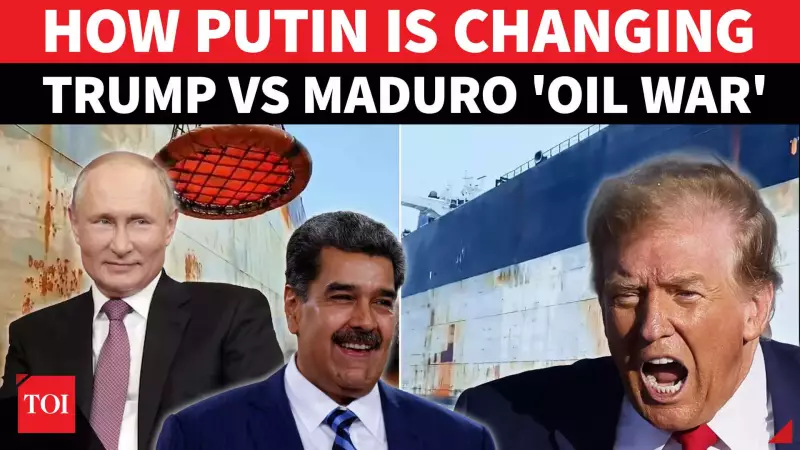
A major international maritime crisis is brewing in the Atlantic Ocean after Russia issued a formal diplomatic demand to the United States, calling on it to cease the pursuit of an oil tanker linked to Iran. The vessel, which was initially heading from Iran to Venezuela, is now at the centre of a high-stakes confrontation involving U.S. forces.
The Chase and the Sudden Russian Claim
The incident began when U.S. forces attempted to board the oil tanker, named Bella One, deeming it a stateless ship subject to seizure under international law. However, the crew refused to comply with the American orders. In a dramatic turn of events, the ship altered its course back into the Atlantic and swiftly sought Russian protection.
To solidify this new allegiance, the crew took two bold steps. They repainted a Russian flag on the vessel's hull and secured overnight registration under Russia, reportedly operating under a new name. This rapid transformation has turned a simple interdiction attempt into a complex geopolitical flashpoint.

Broader Diplomatic Repercussions
This maritime dispute unfolds against a delicate political backdrop. U.S. President Donald Trump is concurrently attempting to broker a peace deal between Russia and Ukraine. Analysts fear that this single tanker incident could severely complicate these already fragile negotiations.
The situation also directly impacts the enforcement of international sanctions and heightens existing tensions surrounding Venezuela's oil trade. The involvement of both Iran and Venezuela, two nations under heavy U.S. sanctions, with Russia as a protective power, creates a triangular standoff with global implications.
What Happens Next?
The immediate question is whether the United States will heed Russia's demand to stand down. The U.S. Coast Guard's continued pursuit risks a direct naval confrontation. The core issues at play include:
- The legality of the ship's new Russian registration and whether it will be recognised internationally.
- The potential for this event to derail wider diplomatic efforts, including the Russia-Ukraine peace talks.
- The precedent it sets for other vessels attempting to evade sanctions by seeking last-minute flag protection from major powers.
This high-seas drama, reported on January 2, 2026, underscores how a single commercial vessel can become a pawn in a much larger game of global power politics, with stability in multiple regions hanging in the balance.