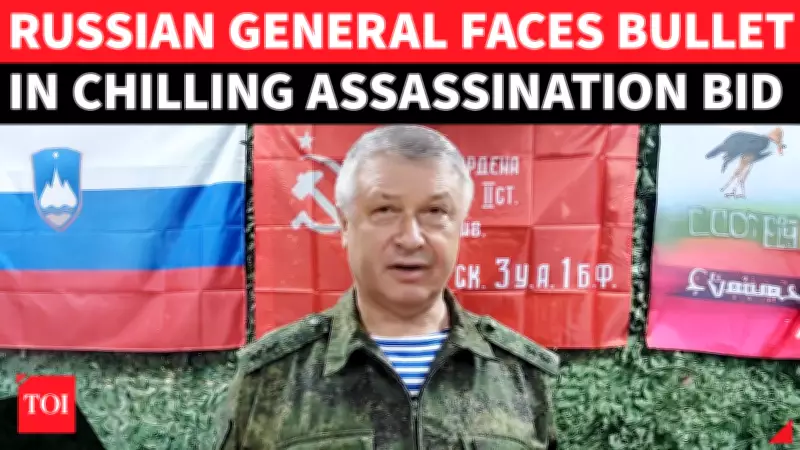
Russia in Turmoil After High-Profile Assassination Attempt on Military Intelligence Chief
A shocking assassination attempt has sent shockwaves through Russia, targeting one of its most senior military intelligence figures in the heart of Moscow. Lieutenant General Vladimir Alekseev, the first deputy chief of Russia's main intelligence directorate, known as the GRU, and a decorated Hero of the Russian Federation, was brutally attacked near his residence on Volokolamskoye Highway. This brazen incident occurred in broad daylight, severely rattling the nation's security apparatus and escalating tensions in an already volatile geopolitical climate.
Details of the Attack and Immediate Aftermath
According to initial reports, the assailant lay in wait for Alekseev, launching a sudden and violent assault by opening fire multiple times before fleeing the scene. The precision and audacity of the attack suggest a well-planned operation, raising immediate alarms about internal security lapses. Russian authorities have swiftly launched a comprehensive criminal investigation, focusing on charges of attempted murder and illegal firearms trafficking. Alekseev was urgently transported to a nearby hospital, where he is receiving critical medical care, though his current condition remains undisclosed to the public.
Broader Implications and Historical Context
This assassination attempt is not an isolated event but part of a disturbing pattern of high-profile strikes on Russian military figures since the onset of the Ukraine war. The growing list of such incidents has fueled intense accusations against Kyiv, with Russian officials often pointing fingers at Ukrainian operatives for orchestrating these attacks. However, the lack of concrete evidence has left these claims mired in controversy and geopolitical maneuvering. The attack on Alekseev, a key figure in Russia's military intelligence hierarchy, underscores deepening security concerns within Moscow, prompting questions about the effectiveness of protective measures for top officials.

As investigations unfold, the incident is likely to strain Russia's domestic stability and international relations further. It highlights the escalating shadow war being waged alongside conventional battlefield conflicts, with intelligence operatives becoming prime targets. The repercussions of this attack could influence military strategies, diplomatic negotiations, and public morale in Russia, making it a pivotal moment in the ongoing conflict dynamics.