Putin's Top Aide Holds Strategic Meeting In Tehran Amid Major Naval Drills
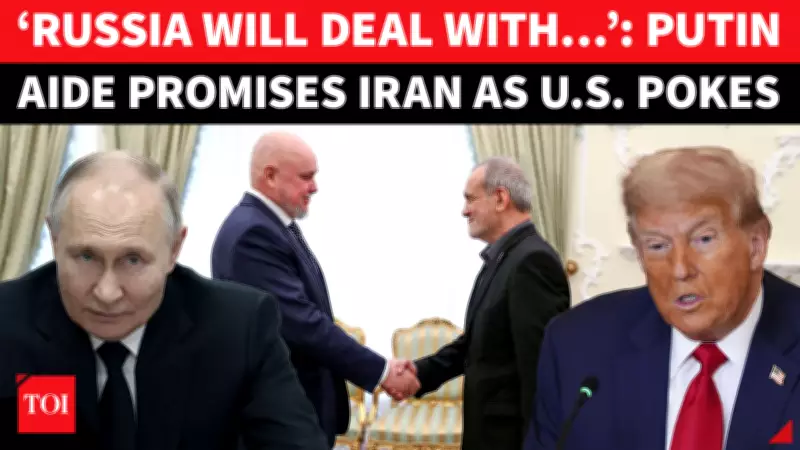
In a significant geopolitical development, Russian Minister Sergei Tsivilev met with Iran's President Masoud Pezeshkian in Tehran on February 19, 2026. The high-level meeting, marked by ceremonial exchanges and firm handshakes, underscored Moscow's unwavering commitment to strengthening its strategic partnership with Tehran.
Solidifying The Russia-Iran Alliance
The discussions between Tsivilev and Pezeshkian focused on deepening bilateral cooperation across multiple sectors, with particular emphasis on energy security and military coordination. This meeting served as a powerful signal that Iran will not stand alone on the international stage, as Russia continues to project its influence in the Middle East.
Russian naval vessels, including advanced corvettes, have arrived at Bandar Abbas port, strategically positioning themselves near the vital Strait of Hormuz. This military deployment represents a tangible demonstration of Moscow's support for Tehran and its regional ambitions.

Joint Naval Exercises Challenge Western Dominance
Concurrently, Russia, Iran, and China have initiated joint naval exercises in the region, creating a formidable trilateral military presence that directly challenges Western naval dominance in these crucial waterways. These coordinated maneuvers represent one of the most significant displays of military cooperation between these three powers in recent years.
The timing of these developments is particularly noteworthy, as they coincide with increased U.S. military presence in the Gulf region. Washington has reportedly placed its forces on heightened alert status in response to these escalating maneuvers.
Geopolitical Implications And Strategic Messaging
From ceremonial diplomatic gestures to the deployment of warships in strategic waters, Russia's comprehensive backing is transforming Iran into an increasingly influential global player. This strengthened alliance sends a stark warning to Western powers, particularly the United States, that any perceived misstep in the region could potentially spark a major international confrontation.
The convergence of diplomatic meetings and military exercises represents a coordinated strategy by Moscow, Tehran, and Beijing to reshape power dynamics in the Middle East. As these three nations deepen their cooperation, the geopolitical landscape of the region continues to evolve in ways that will likely have lasting implications for global security and energy markets.