Russia has issued a stern warning to the United States, calling for an immediate halt to what it describes as "unlawful" actions against a Russian military serviceman. Moscow asserts that this incident has the potential to significantly escalate military and political tensions across the Euro-Atlantic region.
Russia's Formal Diplomatic Protest
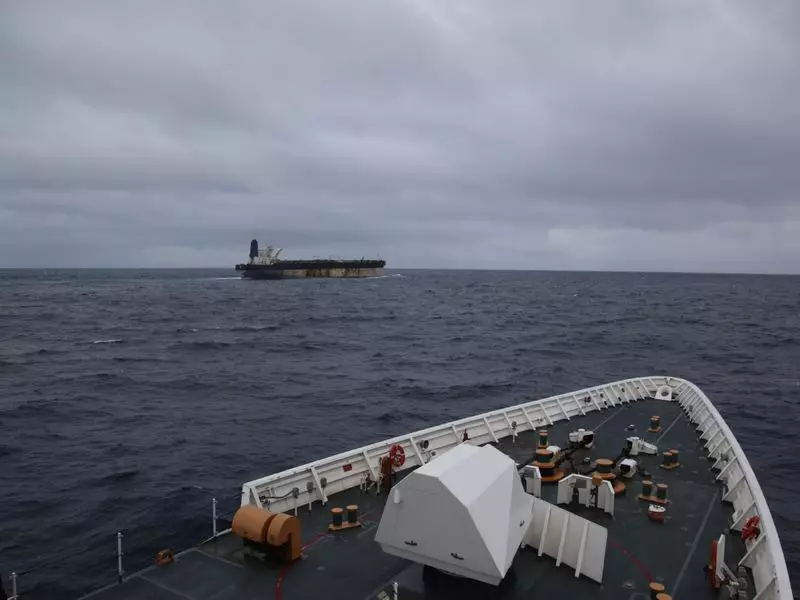
The Russian Foreign Ministry summoned a senior U.S. diplomat in Moscow to present a formal protest. The diplomatic démarche, delivered on a recent Friday, centered on the situation surrounding a Russian marine, identified as Ivan Gorbunov. Russian authorities claim the serviceman was subjected to illegal actions by U.S. officials.
While the exact nature of the "unlawful actions" was not detailed in the public statement, the context suggests it relates to the detention or legal proceedings against Gorbunov. The Russian side emphasized that such conduct by the United States is unacceptable and violates international norms.

A Direct Threat to Regional Stability
In its communication, the Russian Foreign Ministry framed the incident as a serious threat to stability. The official statement declared, "The incident can only lead to a further escalation of military-political tensions in the Euro-Atlantic region." This language indicates Moscow views the matter not as an isolated legal case, but as a flashpoint with broader geopolitical ramifications.
The warning explicitly places the responsibility for any potential deterioration in the strategic security landscape on Washington. Russia's call is clear: the U.S. must cease its current course of action to prevent the situation from spiraling. This exchange occurs against a backdrop of already severely strained relations between the two nuclear powers, primarily due to the ongoing conflict in Ukraine.
Broader Context of US-Russia Relations
This diplomatic confrontation is the latest in a series of friction points between Washington and Moscow. Relations have been at their lowest point in decades, with both nations engaging in:
- Harsh rhetoric and sanctions over Ukraine.
- Expulsions of diplomats from each other's territories.
- Accusations of espionage and malicious cyber activity.
- Military posturing and exercises in Eastern Europe and the Baltic region.
The case of the marine, therefore, adds another layer of complexity to an already volatile relationship. Analysts suggest that incidents involving military personnel are particularly sensitive, as they can quickly be perceived as national affronts, triggering strong patriotic responses and limiting room for diplomatic compromise.
The Russian demand for the U.S. to "cease unlawful actions" is a direct challenge to American legal jurisdiction and authority. It sets the stage for a potential standoff where neither side may be willing to back down, fearing it would be seen as a sign of weakness.
As of now, the United States has not issued a public response to Russia's latest protest. The world watches to see if this incident will be contained through diplomatic channels or if it will become another enduring sore point, further destabilizing the security environment from the Baltic to the Black Sea.