Rubio Highlights Challenges in Negotiating with Iran's Theocratic Leadership
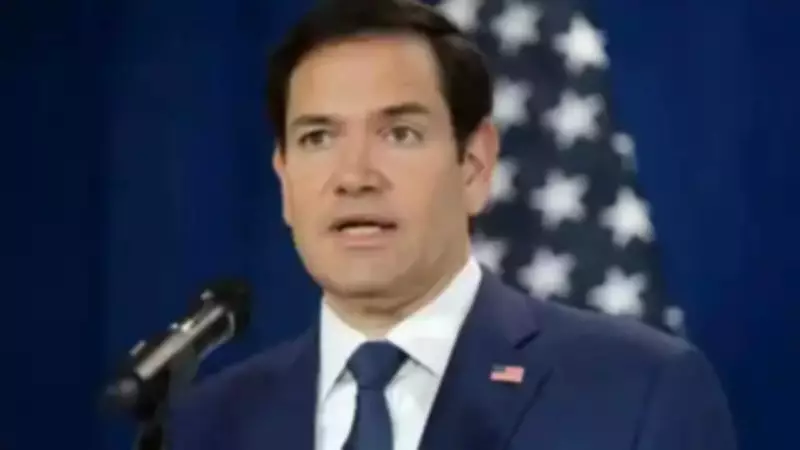
US Secretary of State Marco Rubio emphasized the significant difficulties in reaching an agreement with Iran, attributing the challenges to the country's leadership basing policy decisions on pure theology. Speaking alongside Hungarian Prime Minister Viktor Orban in Budapest, Rubio reiterated his stance, noting that Iran is governed by radical Shia clerics who formulate policies on theological grounds.
Theological Basis of Iranian Policy Decisions
Rubio explained that Iran's decision-making process is deeply rooted in religious ideology, making diplomatic negotiations particularly complex. He stated, "Doing a deal with Iran is not easy. I said it yesterday, I'll repeat it again today. We have to understand that Iran ultimately is governed, and its decisions are governed, by Shia clerics, radical Shia clerics. These people make policy decisions on the basis of pure theology." This perspective underscores the unique obstacles faced by the United States in engaging with Tehran, especially amid ongoing tensions over Iran's nuclear program and regional activities.
US Commitment to Continued Diplomatic Efforts
Despite acknowledging the inherent difficulties, Rubio affirmed that Washington remains committed to pursuing negotiations with Iran. He highlighted that the United States has long recognized the complexities involved but will persist in efforts to prevent further escalation. This commitment comes as diplomatic initiatives aim to address concerns about Iran's nuclear ambitions and its posture in the region, which continue to fuel international tensions.

Rubio Warns Against Overreliance on Single Countries for Critical Goods
In addition to discussing Iran, Rubio addressed global economic security, cautioning against excessive dependence on any single nation for critical supply chains. He argued that such reliance poses risks, particularly when it involves essential goods and services.
Emphasis on Diversification Without Targeting China
Rubio clarified that efforts to diversify supply chains are not inherently anti-China, but rather a pragmatic response to the dangers of over-dependence. He noted, "It's not good for anybody to rely on 1 country or 1 economy for 90% of anything, especially things like critical supply chains. That's not an anti-China thing. That's just the reality that over-dependence on 1 source is not good, especially when there was a willingness in the past to use it as leverage." This statement reflects a broader strategy to enhance economic resilience by reducing vulnerabilities associated with concentrated sources.
Necessity of US-China Engagement
Simultaneously, Rubio underscored the importance of maintaining relations between the United States and China, describing it as "crazy" not to engage given China's substantial population, economic influence, and nuclear capabilities. He emphasized that continued dialogue is crucial for managing global stability and addressing mutual concerns, even as the US seeks to diversify its economic dependencies.