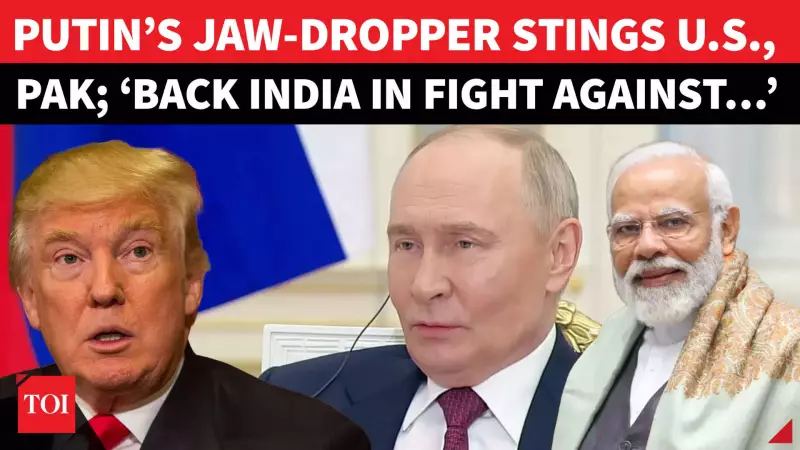
In a statement that has sent ripples through international diplomatic and security circles, Russian President Vladimir Putin made a headline-grabbing remark that has been widely interpreted as a suggestion that Russia would stand and fight alongside India against terrorism. The comment, delivered live, has ignited a flurry of analysis and reaction, with particular attention from Pakistan and observers within the Pentagon.
The Statement That Changed the Game
The incident occurred on December 5, 2025, with the Russian leader's dramatic phrasing instantly capturing global headlines. While the exact wording is parsed by experts, the core message suggesting a military partnership with India in counter-terrorism was clear enough to set off alarms. The timing and public nature of the declaration have added significant weight to its geopolitical impact, moving it beyond routine diplomatic pleasantries into the realm of a potential strategic signal.
Immediate Reactions and Global Chatter
The fallout was swift and concentrated in two key areas. First, the statement created immediate unease in Islamabad, Pakistan. Given the long-standing tensions between India and Pakistan, often centered on the issue of cross-border terrorism, Putin's alignment with India's position is seen as a major diplomatic shift with serious implications for the region's balance of power.
Secondly, the remark has caused a stir within the Pentagon in the United States. American strategists are closely monitoring the deepening ties between Moscow and New Delhi, a relationship that complicates the US's own strategic partnerships in the Indo-Pacific. Putin's bold declaration is viewed as an effort to solidify Russia's role as a key defense partner for India, potentially at the expense of Western influence.
Context and Strategic Implications
This statement did not occur in a vacuum. It comes against the backdrop of a strengthening India-Russia strategic partnership, evidenced by high-level visits and defense collaborations. The visual of Prime Minister Narendra Modi and President Putin sharing a car ride from the Delhi airport, as mentioned in related reports, symbolizes this close rapport. Putin's comment amplifies this visibility into the security domain, directly addressing one of India's primary national security concerns.
The move is also analyzed as a calculated play by Moscow to assert its relevance in South Asian geopolitics amid its own international isolation following the Ukraine conflict. By positioning itself as India's steadfast ally against terrorism, Russia secures a crucial diplomatic and economic foothold.
What This Means for Regional Dynamics
The long-term consequences of this public stance are multifaceted. For India, it represents a powerful, public expression of support from a permanent member of the UN Security Council on a core issue. However, it also necessitates careful diplomatic navigation to balance this relationship with its other key partnerships, including with the US and European nations.
For Pakistan, the statement is a stark diplomatic challenge, potentially isolating it further on the global stage regarding terrorism-related discourse. It may push Islamabad to recalibrate its foreign policy and counter-narratives.
Finally, for global powers, especially the US, the remark underscores the complex, multi-aligned nature of modern geopolitics, where traditional allies like India engage deeply with states like Russia, demanding a more nuanced and flexible approach to international relations and security alliances.