Massive demonstrations have erupted outside the Bangladesh High Commission in New Delhi and in West Bengal's Siliguri, as hundreds of protestors gathered to condemn the brutal killing of a Hindu man in neighbouring Bangladesh. The incident has sparked fresh diplomatic tensions between the two nations.
Details of the Dhaka Lynching and Protests in India
The protests were triggered by the horrific death of 27-year-old factory worker Dipu Chandra Das in Bangladesh's Mymensingh district last week. According to initial reports, a mob of hundreds beat him and set him on fire after accusing him of making derogatory remarks about the Prophet. At least 10 people have been arrested in connection with his death, which has ignited fury within India.
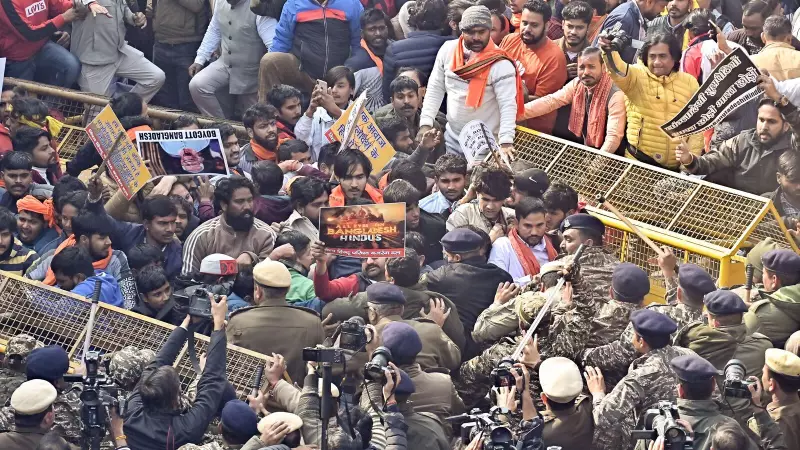
In New Delhi, a swarm of demonstrators carrying saffron flags and shouting slogans against alleged violence on minority Hindus in Bangladesh tried to march to the Bangladesh Deputy High Commission. As police stopped them, protesters broke barricades and clashed with security personnel. A mild lathi charge was reportedly used to disperse the crowd. Similar scenes unfolded in Siliguri.

During the protests, police detained members of the Vishva Hindu Parishad (VHP) and other Hindu organisations. The crowd chanted "Jai Shree Ram" as they were put into buses. In a highly charged atmosphere, effigies of Nobel laureate Muhammad Yunus and the Bangladeshi flag were burned, while slogans against the Bangladesh government filled the air.
Diplomatic Fallout and Security Concerns
The scale of the protests prompted significant security measures. Anticipating the demonstrations, the Bangladesh High Commission had suspended visa services in New Delhi and Tripura as a precaution.
Expressing serious concerns over the security of its missions, Bangladesh summoned the Indian envoy on Tuesday. In a strong statement, the Bangladesh foreign ministry said, "Bangladesh condemns such acts of premeditated violence or intimidation against diplomatic establishments, which not only endanger the safety of diplomatic personnel but also undermine the principles of mutual respect and values of peace and tolerance."
This incident adds strain to bilateral ties, which have been under pressure over the past year following former Prime Minister Sheikh Hasina's flight to India amid deadly protests against her government.
New Twist in the Investigation
As tensions simmer, new details have emerged regarding the killing of Dipu Chandra Das. While the initial narrative pointed to a blasphemy accusation as the trigger, latest information suggests that workplace tensions could have been the underlying cause of the violence. This new angle adds complexity to an already volatile situation, raising questions about the motive behind the mob attack.
The protests in India reflect the deep-seated emotions surrounding the safety of minorities in the region and highlight the fragile nature of diplomatic relations when such incendiary incidents occur. The situation remains tense as authorities in both countries manage the fallout.