

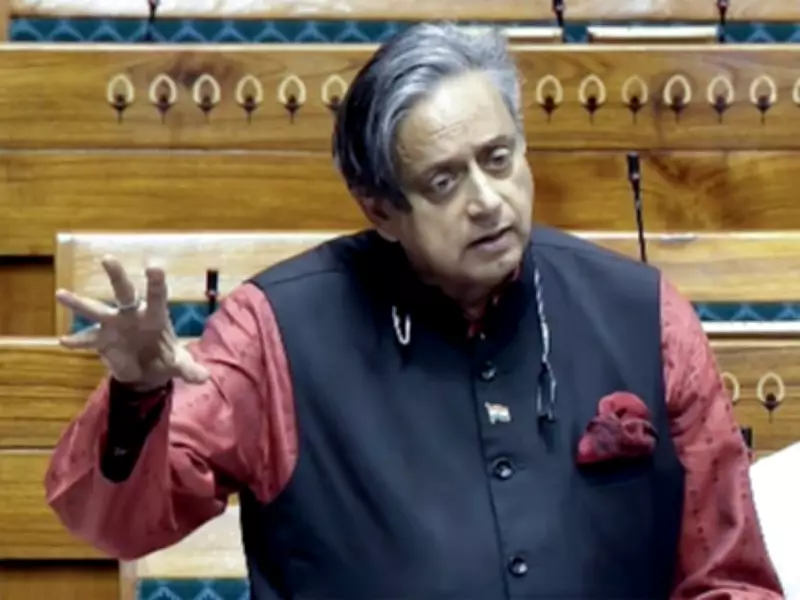
Parliamentary Panel Reiterates 20% Budget Hike for MEA, Urges Foreign Policy Document
The Parliamentary Committee on External Affairs, chaired by Congress MP Shashi Tharoor, has strongly reiterated its call for a 20 per cent increase in the budget allocation for the Ministry of External Affairs (MEA). This recommendation was part of the committee's Twelfth Report on the Demands for Grants for the 2026-27 fiscal year, which was presented in the Lok Sabha on Tuesday.
Budgetary Concerns and Recommendations
The panel highlighted that the current MEA budget of Rs 22,118.97 crore represents only a 7.81 per cent rise over the previous year and constitutes a mere 0.41 per cent of the total Union Budget. This allocation places the MEA at the 23rd position among all ministries, a level deemed insufficient compared to major global economies. The committee emphasized that such limited funding hampers India's ability to effectively pursue its diplomatic and strategic objectives on the world stage.
To address this, the committee referenced a report by the Research and Information System for Developing Countries (RIS), titled 'Analysis of Trends of MEA Budgetary Allocation,' which examined inter-ministerial and cross-country comparisons. The findings underscored the urgent need for enhanced financial support to bolster India's foreign policy infrastructure and global engagements.

Call for a Formal Foreign Policy Document
In a significant move, the committee recommended that the MEA prepare a formal Indian Foreign Policy Document through its Policy Planning and Research Division. This document would be publicly available and serve as a medium-term strategic blueprint, clearly articulating:
- India's foreign policy objectives and guiding principles
- Regional and global priorities
- Key bilateral and multilateral engagements
The panel noted that while 36 countries, including major powers like the United States, United Kingdom, Germany, Japan, and Russia, have published such formal documents, India currently lacks a single overarching and formalized foreign policy strategy. This gap, the committee argued, limits clarity and coherence in India's international approach.
Legislative and Welfare Priorities
The report also addressed several other critical areas, urging immediate action on legislative and welfare fronts:
- Overseas Mobility Bill: The committee stressed the urgent need to treat the Overseas Mobility (Facilitation and Welfare) Bill, 2025, as a legislative priority. This bill aims to replace the outdated Emigration Act of 1983 and strengthen protections for Indian workers abroad.
- Diaspora Engagement: Highlighting the importance of India's 32 million-strong diaspora, the panel called for a review of diaspora welfare allocations and the establishment of a dedicated Department of Overseas Indian Affairs within the MEA to better protect and engage this community.
- Development Assistance: Expressing concern over the protection of development assistance funds, the committee recommended that the Scheme section of the budget, which supports technical and economic cooperation programs, be shielded from cuts. Any unutilized funds should be redeployed toward other development initiatives rather than surrendered.
Operational and Security Enhancements
To improve operational efficiency and security, the committee made several key recommendations:

- Passport and Emigrant Services: Urging the expansion of the Protector of Emigrants network, completion of the mPassport Police App rollout in remaining States and Union Territories, and filling key vacancies in the Central Passport Organisation to ensure efficient service delivery.
- Mission Security: Highlighting heightened global geopolitical risks, the panel called for a dedicated budget sub-head for Mission Security and immediate security audits of all Indian Missions abroad.
- Cultural Presence: Recommending an enhancement of India's cultural presence internationally, including increasing the Indian Council for Cultural Relations (ICCR) budget to Rs 500-600 crore and maintaining strategic cultural centres, such as in Washington DC.
Broader Strategic Focus
The committee's report reflects a broader focus on strengthening India's global standing through enhanced budgetary support, operational capacity, and strategic engagements. Additional priorities included ensuring the financial sustainability of Nalanda University and securing commitments from East Asia Summit member countries.
Overall, the parliamentary panel's recommendations aim to fortify India's foreign policy framework, improve diaspora welfare, and bolster the MEA's capabilities to navigate an increasingly complex global landscape.





