Pakistan's Trump Courtship Fails as India Secures Better US Trade Terms
The conventional wisdom in Washington diplomatic circles had long suggested that Pakistan outmaneuvered India in managing relations with former President Donald Trump. Islamabad appeared to master the art of flattery, consistently praising Trump to extraordinary heights, repeatedly nominating him for the Nobel Peace Prize, offering strategic cooperation, and eagerly joining his proposed peace initiatives.
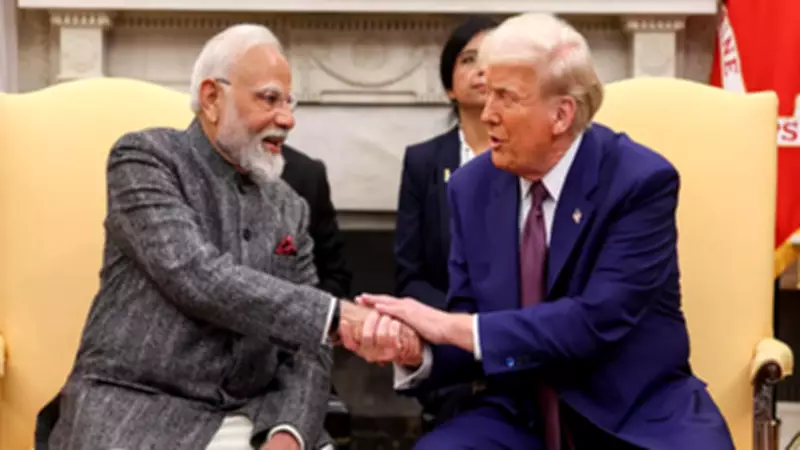
Perhaps Pakistani leadership believed they had reclaimed their historical role as an indispensable intermediary in South Asia, while New Delhi remained the stubborn partner unwilling to bow to Trump's demands. This perception collapsed dramatically when Trump announced a new trade agreement with India that significantly reduces tariffs on Indian exports to just 18%.
The Social Media Meltdown
While specific details of the trade arrangement continue to be finalized, the announcement triggered an immediate and intense reaction across Pakistani social media platforms. One particularly viral tweet captured the prevailing sentiment with the phrase "Mover, shaker, and beggars" - a biting commentary that resonated far beyond mere trade statistics.

The Pakistani response revealed deeper concerns about international standing and diplomatic hierarchy rather than simple economic calculations. Initial reactions progressed through distinct emotional stages:
- Disbelief at the apparent diplomatic outcome
- Sarcastic commentary about Pakistan's extensive efforts to please Trump
- Anger and introspection directed inward at foreign policy approaches
Social media users engaged in what resembled ritualistic accounting of Islamabad's public courtship of the former US president. The repeated Nobel Peace Prize nominations resurfaced frequently as punchlines, alongside Pakistan's enthusiastic endorsements of Trump's various international initiatives.
The Meme Warfare and Public Sentiment
A widely circulated post summarized the situation bluntly: despite Pakistan's comprehensive efforts to appease Trump - including Nobel nominations, participation in peace boards, and mineral cooperation offers - India secured superior trade terms while resisting presidential pressure for months.
The situation appeared even more galling as users highlighted India's simultaneous success in securing major trade concessions with the European Union, compounding the sense of diplomatic disadvantage.
Online discourse quickly evolved from disbelief to dark humor. Viral images featured Prime Minister Shehbaz Sharif and Army Chief Asim Munir presenting an AI-generated magazine cover showing Modi and Trump together, with Urdu captions suggesting Pakistan's leadership remained trapped while global dynamics progressed.
Across Facebook and Instagram, memes treated the 18% versus 19% tariff differential as a symbolic scoreboard. Comment sections overflowed with variations of the same fundamental question: why did diplomatic compliance fail to translate into tangible benefits?
Even typically chaotic YouTube reaction videos demonstrated unusual consensus, with commentators questioning the foundational assumptions behind Pakistan's Trump strategy and wondering what concrete advantages the flattery had actually produced.
The Strategic Misreading
For months, Pakistan's foreign policy establishment had convinced itself that India-US relations were deteriorating while Pakistan-US ties were stabilizing. Trump's occasional public frustration with India was misinterpreted as strategic rupture, while Pakistan's warmth was mistaken for genuine influence.
The trade agreement decisively shattered this narrative. What Pakistani analysts failed to recognize was that India's apparent indifference toward Trump represented deliberate strategy rather than diplomatic neglect. New Delhi consciously avoided participating in Trump's political theater, choosing calculated distance over desperate engagement.

International reporting throughout the previous year revealed that as tariff tensions escalated, India maintained strategic detachment. At the height of diplomatic standoffs, Prime Minister Narendra Modi reportedly declined multiple phone calls from Trump - an extraordinary move in great-power diplomacy where communication channels typically remain open regardless of disagreements.
The Final Exchange and Its Implications
The frostiness in India-US relations became particularly evident during what would become the leaders' final direct exchange. According to detailed reporting, a June phone conversation deteriorated when Trump claimed credit for de-escalating India-Pakistan tensions and revived his Nobel Peace Prize rhetoric.
New Delhi responded firmly, asserting that India and Pakistan had managed bilateral matters without American mediation. Following this exchange, the two leaders did not communicate for months, signaling India's commitment to its diplomatic approach.
This context makes the eventual trade agreement particularly disruptive to Pakistan's foreign policy narrative. India achieved favorable terms not by courting Trump more effectively, but by refusing to court him at all - a strategic choice that ultimately yielded superior diplomatic and economic outcomes.
The episode serves as a revealing case study in contemporary diplomacy, demonstrating how different approaches to great-power relations can produce dramatically different results in the complex arena of international trade and geopolitics.