Pakistan's Diplomatic Stance Amid Iran-Israel War
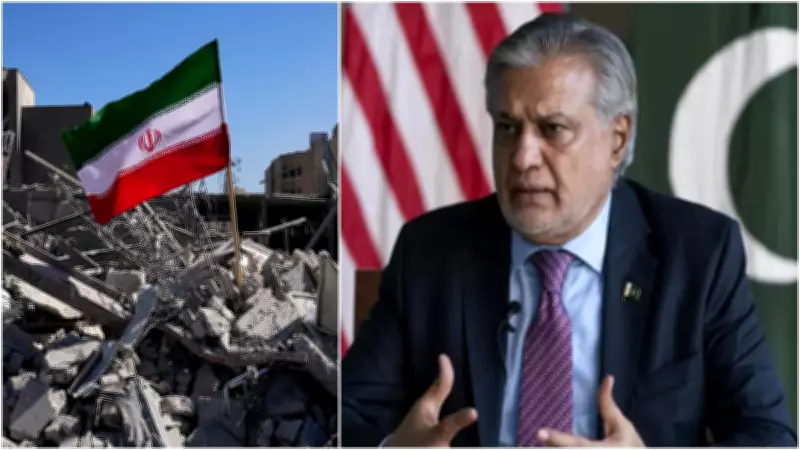
In a significant development, Pakistan's Foreign Minister Ishaq Dar has signaled a cautious approach regarding the ongoing conflict between Iran and Israel. The minister's statements highlight Pakistan's commitment to maintaining regional stability and avoiding direct involvement in the war, which has escalated tensions across the Middle East.
Minister Dar's Key Remarks
During a recent press briefing, Ishaq Dar emphasized that Pakistan is closely monitoring the situation but will not be drawn into the conflict. He stated, "Our priority is to safeguard our national interests and promote peace in the region." This stance underscores Pakistan's long-standing policy of non-interference in external conflicts, particularly those involving neighboring countries like Iran.
Dar further elaborated that Pakistan is engaging in diplomatic channels to de-escalate tensions, advocating for dialogue and peaceful resolution. He pointed out that any escalation could have broader implications for regional security, affecting trade routes and economic stability in South Asia.

Regional and Global Implications
The Iran-Israel war has raised concerns globally, with many nations assessing their positions. Pakistan's cautious stance is seen as a strategic move to balance its relationships with both Iran and other international partners. Historically, Pakistan has maintained diplomatic ties with Iran, while also engaging with countries like the United States and Saudi Arabia, which have vested interests in the conflict.
Experts suggest that Pakistan's approach could influence other regional players, such as Afghanistan and India, who are also monitoring the war closely. The potential for spillover effects, including refugee crises or economic disruptions, adds urgency to Pakistan's diplomatic efforts.
Pakistan's Historical Context
Pakistan has a history of navigating complex geopolitical landscapes, often prioritizing stability over intervention. In past conflicts, such as the Gulf Wars, Pakistan adopted similar cautious stances, focusing on humanitarian aid and diplomatic mediation rather than military engagement. This pattern reflects a broader strategy to protect its sovereignty and economic interests amid global turmoil.
Minister Dar's signals align with this tradition, suggesting that Pakistan will likely continue to advocate for peace through international forums like the United Nations, rather than taking sides in the war.
Future Outlook
As the Iran-Israel war progresses, Pakistan's role as a diplomatic actor will be crucial. Dar hinted at potential behind-the-scenes negotiations to prevent further escalation, but stopped short of detailing specific actions. Observers note that Pakistan's stance may evolve based on developments in the conflict, but for now, restraint remains the guiding principle.
In conclusion, Pakistan's position, as articulated by Ishaq Dar, emphasizes a balanced and prudent approach to the Iran-Israel war, with a focus on regional harmony and non-interference. This stance is expected to shape Pakistan's foreign policy in the coming months, as it navigates the complexities of Middle Eastern geopolitics.