Pakistan Hosts High-Stakes US-Iran Talks Amid Ceasefire Uncertainty
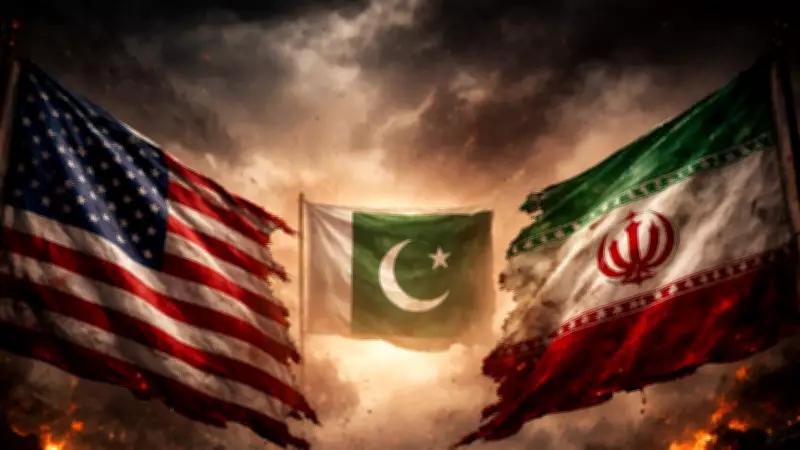
Pakistan is set to host critical indirect negotiations between United States and Iranian representatives in Islamabad, aiming to stabilize a fragile ceasefire framework and prevent further escalation of a conflict that has already reshaped regional security dynamics and global energy flows. However, significant uncertainty clouds the talks, with Iran denying reports of any formal delegation departure from Tehran and conditioning its participation on the cessation of Israeli strikes in Lebanon.
Security Preparations and Diplomatic Setup
Meanwhile, Pakistan has intensified security measures across Islamabad, implementing road closures, increasing troop deployment, and restricting access around key venues as preparations advance. The country is preparing to facilitate indirect negotiations, acting as a shuttle mediator with delegations expected to remain in separate rooms while proposals are exchanged through intermediaries.
Delegation Details and Iranian Denials
The US delegation is anticipated to be led by Vice President JD Vance, alongside special envoy Steve Witkoff and senior adviser Jared Kushner, according to officials familiar with the planning. In contrast, Iran's participation remains highly uncertain. While some international reports suggested a delegation had already been dispatched to Islamabad, Iranian state media and officials have firmly rejected these claims.

As one Iranian source, cited in state media, stated: "The news from some media outlets that an Iranian negotiating team has arrived in Islamabad, Pakistan, to negotiate with the Americans is completely false." Officials in Tehran have further insisted that senior figures, including Foreign Minister Abbas Araghchi and Parliament Speaker Mohammad Bagher Ghalibaf, have not travelled for any such talks.
Iran Questions Timing and Viability
Iran has also cast doubt on both the timing and viability of the negotiations, directly linking its engagement to developments in Lebanon and ongoing Israeli military activity there. The Iranian position effectively ties any diplomatic progress in Islamabad to a halt in Israeli strikes in Lebanon, significantly complicating efforts to keep the US–Iran channel open.
State-linked reporting suggests that discussions remain suspended until ceasefire commitments are honored, particularly in Lebanon, which Tehran and several regional actors argue cannot be separated from the broader conflict architecture.
Lebanon as Central Fault Line
Lebanon has increasingly become the critical pressure point in the wider ceasefire framework, with diverging interpretations threatening to derail the diplomatic process. Iran and allied regional actors argue that developments in Lebanon are inseparable from any broader ceasefire arrangement, especially given continued Israeli strikes and Hezbollah-linked cross-border activity.
Israel, however, firmly rejects this linkage. It maintains that its military operations in Lebanon fall outside any US–Iran understanding and insists on its right to continue targeting Hezbollah infrastructure. This divergence has turned Lebanon into a decisive fault line that could determine whether the Islamabad talks proceed or collapse entirely.
Israel Rejects Pakistan's Mediation Role
Israel has also pushed back strongly against Pakistan's involvement as a mediator, particularly following remarks by Pakistan's Defence Minister Khawaja Asif, who had described Israel as "evil and a curse for humanity" in a post that was later deleted. Israeli officials condemned the statement and questioned Pakistan's neutrality in facilitating such sensitive negotiations.
Israel's envoy to the United States remarked: "Even if it is to your dismay, Israel is here to stay. That's not for negotiation." Separately, Israeli Foreign Minister Gideon Sa'ar also criticized Pakistan's role, accusing it of undermining its credibility as a neutral intermediary.

Pakistan's Balancing Act Under Scrutiny
Pakistan's emergence as a facilitator places it in a delicate diplomatic position, as it maintains working relationships with both Washington and Tehran while lacking formal diplomatic ties with Israel. Islamabad has highlighted its behind-the-scenes involvement in earlier phases of US–Iran communication, including the relay of proposals and counter-proposals between both sides through indirect channels.
However, recent political statements and rising regional tensions have complicated Pakistan's ability to maintain a perception of neutrality, raising questions over whether it can sustain its role as a trusted mediator at a critical juncture.
Wider Agenda and Global Implications
Beyond the immediate ceasefire discussions, the Islamabad talks are expected to touch on long-standing strategic disputes, including Iran's nuclear programme, sanctions relief, and broader regional security guarantees. A key global concern remains the Strait of Hormuz, through which a significant share of global oil shipments passes, making its stability central not only to regional security but also to global economic equilibrium.
At a time of heightened volatility, the Islamabad talks are emerging as a potential last-ditch diplomatic channel—but one increasingly shaped by the unresolved conflict in Lebanon, which now sits at the centre of the broader geopolitical standoff.