In a significant diplomatic statement, Pakistan has officially endorsed China's assertion that it played a mediating role during the brief but intense military conflict with India in May 2025, known as Operation Sindoor. This belated endorsement contrasts sharply with India's consistent position and previous accounts of how the hostilities were paused.
Pakistan's Public Endorsement of Chinese Claims
Addressing the media on Thursday, Pakistan's Foreign Office spokesperson, Tahir Andrabi, stated that Chinese leaders were in constant touch with Pakistan's leadership during the critical period. He detailed that Beijing had also made "certain contacts with the Indian leadership in those three, four days in May, 6th to 10th and maybe prior to that and after that."
Andrabi characterized these exchanges as "very positive diplomatic exchanges" that helped de-escalate the situation. "So, I'm sure that the Chinese characterisation of mediation is correct," he affirmed, adding that Pakistan firmly supports the position stated by Chinese Foreign Minister Wang Yi.

India's Firm Rejection and the Timeline Discrepancy
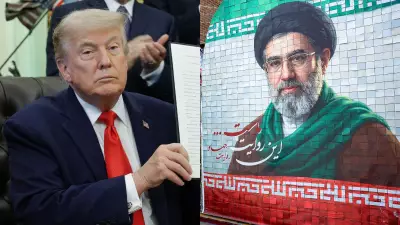
This statement from Islamabad is notable for its timing and contradiction. It marks Pakistan's first public acknowledgment of Beijing's alleged brokering role, coming after a considerable lag. Previously, credit for facilitating a pause in the four-day conflict was attributed exclusively to the intervention of US President Donald Trump.
The Indian government has consistently dismissed any claims of third-party mediation. New Delhi's official stance maintains that the military pause followed a direct request from Pakistan's Director General of Military Operations (DGMO) to his Indian counterpart. India has explicitly rejected Chinese Foreign Minister Wang Yi's earlier claims of mediation during the crisis.
Diplomatic Narratives and Regional Implications
Andrabi framed China's efforts as "diplomacy for peace, for prosperity, for security," suggesting it was part of broader international efforts in those "fateful days." This narrative aligns Beijing's actions with repeated assertions by former US President Trump, who also claimed Washington played a decisive role in ending the confrontation between the nuclear-armed neighbours.
The conflicting accounts highlight the complex diplomatic narratives surrounding the May 2025 conflict. While Pakistan now aligns with China's version, India underscores bilateral military channels as the actual mechanism for de-escalation. This divergence points to the ongoing geopolitical positioning in the region, where claims of diplomatic influence carry significant weight.
The belated nature of Pakistan's statement raises questions about the coordination of narratives between Islamabad and Beijing post-conflict, and its potential impact on future crisis diplomacy in South Asia.