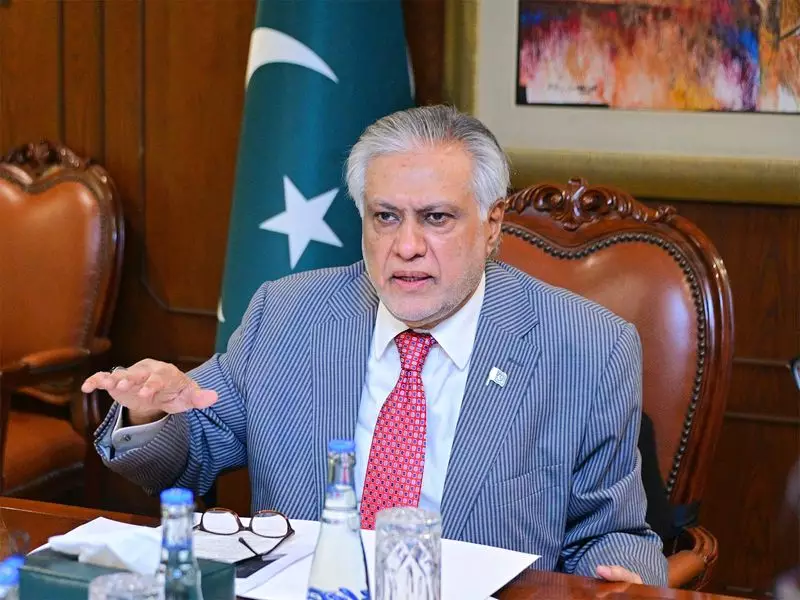
In a significant and rare admission, Pakistan's Foreign Minister, Ishaq Dar, has publicly confirmed that Indian military strikes targeted the strategically important Nur Khan Air Base in Balakot, Pakistan, in May of this year. The acknowledgment came during a session in the Pakistani Senate, marking a notable shift from Islamabad's previous, more ambiguous statements regarding the incident.
The Official Admission and Details of the Strike
While addressing the upper house of Parliament, Senator Ishaq Dar stated that the Indian strikes caused damage to installations at the air base and resulted in injuries to personnel. This direct confirmation provides concrete details about an event that had been the subject of much speculation and indirect reports since it occurred. The Nur Khan Air Base, located in the Khyber Pakhtunkhwa province, is a key facility for the Pakistan Air Force.
The strikes are understood to have been a response to the assassination of three Indian soldiers in the Kulgam district of Jammu and Kashmir earlier in May. Indian security forces had attributed that attack to terrorists who had infiltrated from across the border. The retaliatory action on the Nur Khan base demonstrates a continued policy of robust military response to cross-border terrorism, a stance solidified after the 2019 Balakot airstrikes.

Context and Escalating Tensions
This incident is part of a persistent pattern of heightened tensions between the two nuclear-armed neighbors. The confirmation by Pakistan's top diplomat underscores the seriousness of the event and its potential to escalate hostilities. It brings into sharp focus the ongoing security challenges along the Line of Control (LoC) and the international border, where ceasefire violations and infiltration attempts remain a constant concern.
The May strike and its subsequent confirmation follow the precedent set by the 2019 Balakot airstrikes, when Indian fighter jets crossed the Line of Control to target a Jaish-e-Mohammed terror camp in Balakot, Pakistan, in response to the Pulwama attack. The recent event indicates that India's doctrine of preemptive and retaliatory strikes against terror launchpads remains actively in play.
Implications for Regional Diplomacy and Security
Foreign Minister Ishaq Dar's statement is likely to have several immediate repercussions. Firstly, it officially places the event on the bilateral diplomatic agenda, potentially leading to further discussions or protests through formal channels. Secondly, it informs the domestic audience in Pakistan about the scale of the incident, which had previously been downplayed or reported with less clarity in local media.
For India, the confirmation validates its position on taking decisive action against security threats originating from Pakistani soil. It highlights the ongoing intelligence and operational capabilities aimed at counter-terrorism. The development also keeps the international community's attention on the volatile security situation in South Asia, where any military exchange carries significant risk.
Analysts suggest that while such strikes demonstrate resolve, they also keep the region on a knife's edge. The need for effective diplomacy to de-escalate tensions and address the root causes of cross-border terrorism becomes ever more critical. The public acknowledgment by a senior Pakistani leader could be a double-edged sword, potentially hardening positions on both sides or, conversely, creating a new factual baseline for future dialogue.
As both nations navigate this latest revelation, the focus will be on whether it leads to a new cycle of rhetoric and response or prompts behind-the-scenes efforts to manage the fallout. The security establishments in New Delhi and Islamabad will be closely monitoring the situation, with the broader region hoping for stability over escalation.